The Legends, Spirits, and Secrets Living Inside Mount Banahaw
Legend has it that Mount Banahaw holds more than wildlife: spirits, sacred caves, mystical sects, and stories passed down for generations.
Legend has it that Mount Banahaw holds more than wildlife.
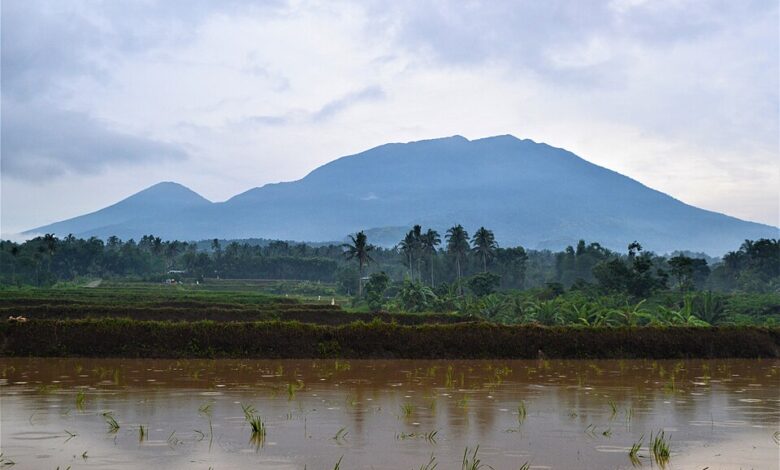
The mountain sits about 170 kilometers southeast of Manila, straddling Quezon and Laguna provinces. On paper, it is a protected landscape, a stratovolcano, a national park, home to rare endemic species. But ask the people who have climbed it for generations, and you will get a different answer.
They will tell you about the cave that judges you, a spring that heals, and forest guardians who let some pilgrims pass and send others wandering in circles until something inside them shifts.
They will tell you that Mount Banahaw is alive and that it knows when you are coming.
The Sacred Mountain
Long before the Spanish arrived, the slopes of Mount Banahaw already held meaning for the people living near them. The mountain was not empty. It was inhabited — by spirits, by presence, by something that demanded respect from anyone who entered.
When Catholicism came, it did not erase those older beliefs. It layered over them, creating something entirely its own. Caves became stations of the cross. Rock formations took on saint names. A mountain that already felt sacred became, in the eyes of many Filipino pilgrims, the New Jerusalem; a place where God chose to make himself known not in Rome or in Jerusalem, but here, on this Philippine peak.
Some devotees believe Mount Banahaw holds divine wisdom the institutional Church has lost. Others climb it for healing, protection, and answers to questions the world outside could not give them.
The mountain has been receiving them for centuries.
The cave that tests you
Inside Mount Banahaw, more than a hundred sacred spots, caves, waterfalls, springs, and clearings named after saints and moments from scripture. Pilgrims move through these sites in a full circuit called pamumuesto. For some, it takes a full day. For others, the practice becomes a lifetime.
One of the most talked-about puestos is Husgado, the judgment cave. To pass through it, you squeeze your body into a narrow gap in the rock. If you make it through, it means the cave decides. The logic is physical and spiritual, and pilgrims have gone for generations.
At another puesto called Prisintahan, devotees formally introduce themselves to the mountain. They give their name, ask to be included in the listahan ng buhay — the list of the living — and carry containers out for anything they may leave behind. Nothing of yourself stays on sacred ground.
The spirits that watch the forest
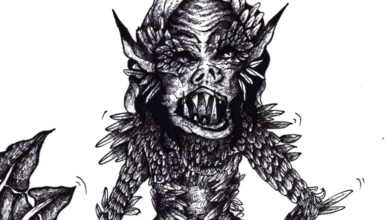
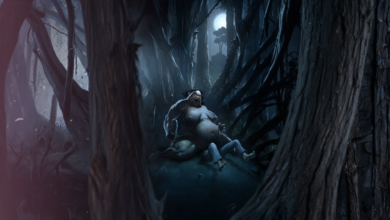
The forests of Mount Banahaw are said to be home to engkantos; elemental beings who inhabit the trees, the water, and earth. They are not friendly or hostile by nature. They are present. And the stories say they notice what kind of person you are before you notice them.
Pilgrims with impure intentions, the legends go, tend to get lost. Familiar paths become strange. People wander in circles for hours. Then a decision, a confession, or a change of heart happens, and the path reveals itself again.
Healing springs dot the mountain, and devotees collect the water in bottles to bring home. Anting-anting, protective amulets charged with spiritual power, draw their potency from places like Mount Banahaw. Some pilgrims climb specifically to seek new ones, to recharge the ones they carry, or to ask the mountain for a vision.
Whether you believe any of it or not, the belief itself has shaped this place. The stories are old enough that they have become part of the landscape.
The sects that built a home here
Mount Banahaw also became a refuge for religious movements. Several of these groups planted roots on the mountain’s slopes — and some are still there.
The Tatlong Persona Solo Dios was founded in 1936, with a church in the village of Kinabuhayan. KALK — Kapatiran ang Likas na Kaliwanagan — was founded in 1927 by Anghel Lorenzo, known as Apo Anghel, who built a site called Templo Rizal. That name is not a coincidence. Several Banahaw sects regard Jose Rizal not just as a national hero but as a prophetic figure — someone the mountain itself chose.
The Mystica, formerly known as Suprema de la Iglesia del Ciudad Mystica de Dios, is perhaps the most recognized of these groups. Their presence on the mountain during Holy Week draws attention every year; pilgrims in white through the mist, following a calendar and a cosmology the rest of the country does not fully share.
They are part of the mountain’s living history.
READ: Rare Corpse Flower Found in Apayao: Meet the Mysterious Plant That Smells Like A Dead Body
Mount Banahaw is closed, and people still go
Before 2004, more than half a million pilgrims climbed Mount Banahaw every Holy Week. The damage accumulated fast — trails eroded, waste piled up, wildlife retreated. DENR closed the peaks that year for rehabilitation. In 2009, Republic Act 9847 formalized the protection.
The closure did not stop everyone.
Forest guards, volunteers, police, and soldiers enforce the ban during Holy Week. Still, more than 40,000 visitors have made it up in recent years. Villagers know the mountain. They have always known the mountain.
Some areas remain accessible; Kinabuhayan and Santa Lucia are designated zones where religious activities and camping continue. But the summit and the most sacred interior spaces stay closed, resting under forest cover, waiting.
A version of Mount Banahaw in geology textbooks and ecology reports. And there is the version that belongs to the people who have been climbing it for generations, carrying their intentions up through the mist, looking for something the city cannot give them.
Both versions are real. The mountain holds them both.