Mount Makiling Might Hold the Key to Cleaner Fuel
Scientists from UP found fat-storing yeast inside Mount Makiling that can be converted into biodiesel. This is what that discovery could mean for the Philippines.
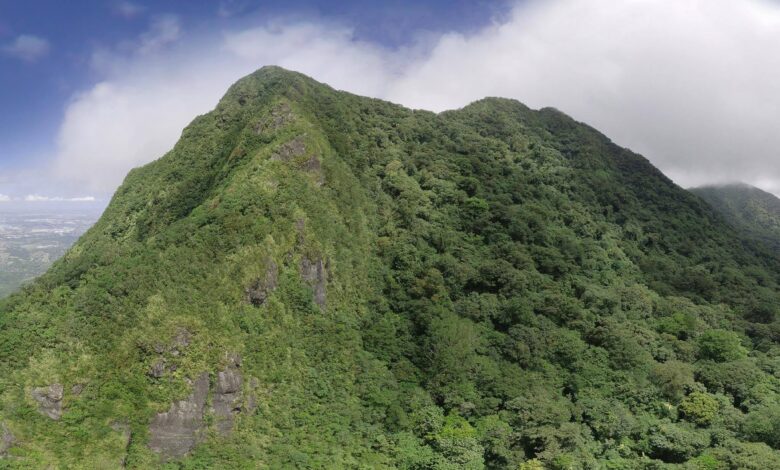
Deep inside Mount Makiling, one of the most biodiverse forests in the Philippines, scientists from the University of the Philippines have found something small enough to miss with the naked eye. But what they found could eventually change how the country powers itself.
It’s yeast. And it might be the future of biodiesel.
What Are Oleaginous Yeasts in Mount Makiling?
Before anything else, let’s deal with the word nobody warned you about.
Oleaginous comes from the Latin word oleum, which simply means oil. Oleaginous yeasts are microorganisms with one unusual ability: they store large amounts of fat inside their cells. Not a little fat. Significant fat. The kind that, under the right conditions, can be extracted and converted into biodiesel. Biodiesel is a renewable and cleaner-burning alternative to the petroleum diesel that currently powers most of the vehicles and machinery Filipinos depend on every day.
These yeasts are not rare in nature. But finding the right strains, the ones that produce high enough lipid content to be useful, is the challenge. And that’s exactly what the UP team set out to do.
Into the Forest of Mount Makiling
Researchers led by Pajares et al. collected yeast samples from the Mount Makiling area, a rich ecosystem known for its biodiversity. The team screened and identified several oleaginous yeast strains capable of producing high lipid content. This was from a total of 258 colonies gathered from ferns, moss, roots, orchids, bark, and leaves of several forest trees including Narra, Balete, Bagtikan, and Salisi.
Twenty-two out of those 258 yeasts isolated from the barks, roots, canopy leaves, and associated epiphytic plant material of various forest trees in the Mount Makiling Forest Reserve were found to be potentially oleaginous.
Two strains stood out above the rest. BUB8 and NFR6, isolated from the upper bark of a Bagtikan tree and the fern-root of a Narra tree respectively, showed the highest biomass and lipid production levels.
BUB8, later identified as Rhodotorula sp., turned out to be the star of the study. It can produce significant amounts of microbial lipids from glucose and glycerol, and shares an almost similar fatty acid profile to vegetable oils. This is exactly the kind of profile that makes biodiesel conversion viable.
What Researchers Found in Mount Makiling
The researchers started with 258 yeast colonies collected from ferns, moss, roots, orchids, bark, and leaves in the Mount Makiling Forest Reserve. Twenty-two showed signs of being oleaginous, meaning they could accumulate significant amounts of lipids.
Two strains, BUB8 and NFR6, stood out for their biomass and lipid production. BUB8 was especially notable: it produced lipids using both glucose and glycerol, and its fatty acid profile was dominated by oleic acid, a composition considered suitable for biodiesel feedstock. The researchers later identified BUB8 as a member of the Rhodotorula genus.
The team also converted the extracted lipids into fatty acid methyl esters, or FAMEs, and analyzed their composition. That gave the researchers evidence that the oil produced by BUB8 has characteristics relevant to biodiesel production, although the study points to further optimization before this could become a practical fuel source.
Why These Yeasts Could Matter for Philippine Fuel
The Philippines imports the vast majority of its fossil fuels. Every spike in global oil prices hits Filipino households and businesses directly, from pump prices to electricity costs. This also affects the price of goods transported across the archipelago. Finding domestic, renewable alternatives to fossil fuel is not an abstract environmental goal for this country. Instead, it is an economic and energy security issue.
Biodiesel already exists in the Philippine energy mix under the Biofuels Act of 2006, which mandates a blend of coconut-based biodiesel in diesel fuel. But coconut-based production competes with food and agricultural land use. Microbial biodiesel from yeasts like the ones found in Mount Makiling offers a different pathway. This one does not take anything off anyone’s plate.
That point deserves attention. The very forest that produced this discovery, the Mount Makiling Forest Reserve, is a protected area under the management of UP Los Baños. The fact that a potential solution to one of the country’s energy challenges was found inside a forest makes a quiet but powerful argument for why protecting that forest matters.
READ: Affordable Dialysis Machine by UP Graduates Wins James Dyson Award
This Is Early Stage, But It’s Real
To be clear: this research is a foundation, not a finish line. Scaling microbial biodiesel from laboratory conditions to industrial production involves significant engineering, economic, and logistical challenges. The process of growing enough yeast, extracting lipids at scale, and converting them into fuel at a cost that competes with existing options is still a long road.
But the road has to start somewhere. And it started, in this case, on the bark of a Bagtikan tree in the hills of Laguna.
The study was conducted by Irene Pajares, Princess Requiso, Lorenzo Fabro Jr., Kristine Rose Ramos, and Asuncion Raymundo, representing the National Institute of Molecular Biology and Biotechnology and the Institute of Biological Sciences at UP Los Baños and UP Manila. It was published in the Journal of Applied Biology and Biotechnology and released by the UP Office of the Vice President for Academic Affairs.
Filipino scientists, in a Filipino forest, working on a solution to a Filipino problem. That’s worth paying attention to.