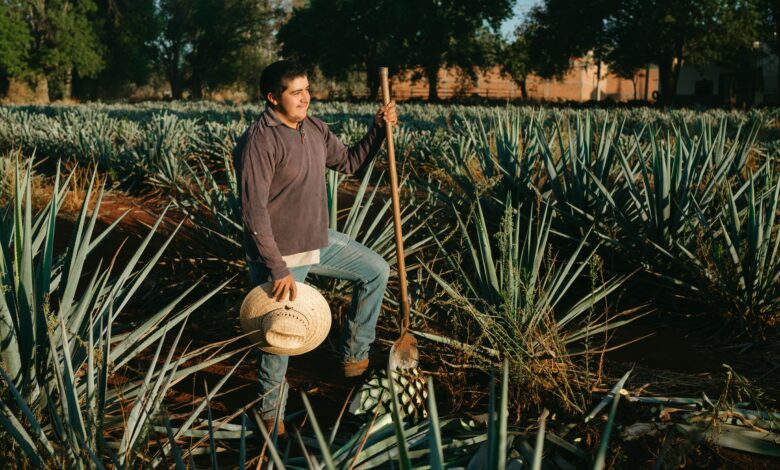
Did Filipinos Teach Mexicans How to Make Tequila?
Here's the surprising story behind the spirit.
Tequila is unmistakably Mexican. Its history is tied to agave, Indigenous knowledge, and centuries of local traditions that eventually shaped one of the world’s best-known spirits. Yet buried in that history is a surprising Filipino connection—one that has led some to explore the fascinating story of Filipino tequila and its influence dating back to the days when Manila and Acapulco were linked by one of the world’s most important maritime trade routes.
Long before tequila became a global drink, Filipino sailors and migrants were crossing the Pacific aboard the Manila-Acapulco galleons. They brought goods, customs, and technical knowledge with them, including traditions surrounding the production of distilled spirits. When that knowledge encountered Mexico’s established relationship with agave, it became part of a much bigger story about how cultures influence one another.
How Did Filipino Distilling Knowledge Reach Mexico?
For more than 250 years, the Manila-Acapulco Galleon Trade connected the Philippines with Mexico. From 1565 to 1815, ships regularly crossed the Pacific carrying goods between Manila and Acapulco, linking the Philippines to a much larger trade network that stretched across Asia, the Americas, and Europe.
But the galleons carried more than cargo. Filipino sailors and migrants also made their way to Mexico, particularly along its Pacific coast, bringing skills and traditions from home. Among these was knowledge of producing distilled spirits from fermented coconut sap.
In the Philippines, fermented coconut sap is known as tuba. When distilled, it produces stronger spirits such as lambanog, a traditional Filipino spirit with a long history in the country. The distilling technology used to produce these spirits would eventually become associated with the Filipino still in parts of Mexico.
What Is a Filipino Still?
Traditional Filipino stills were relatively simple pieces of equipment made from locally available materials. Their basic purpose was the same as other distillation systems: heat a fermented liquid, capture the alcohol-rich vapor, and condense it back into a liquid with a higher alcohol concentration.
When Filipino-style stills appeared in western Mexico, the technology could be adapted to local conditions and ingredients. This is where the story becomes particularly interesting because Mexico already had a plant deeply connected to its foodways and culture: agave.
When Filipino Distilling Met Mexican Agave
Agave was not introduced to Mexico by Filipinos. Indigenous communities had been using different agave species for centuries, including for food, fiber, and fermented beverages. Mexico already had extensive knowledge of the plant before Filipino migrants and their distilling technology entered the picture.
What changed was the combination of existing knowledge and a new piece of technology. Filipino-style stills could be adapted to distill fermented agave, creating spirits that became part of the broader history of Mexican agave distilling.
This does not mean that Filipino migrants simply taught Mexicans how to make the tequila we know today. Tequila’s development was much more complicated, involving Indigenous Mexican practices, Spanish colonial influence, local experimentation, and different distilling technologies over generations.
The Filipino contribution is better understood as one thread in that larger history.
So, Did Filipinos Invent Tequila?
Not exactly. Tequila has a distinctly Mexican history, and reducing its development to a single invention or cultural influence would leave out the Indigenous communities and Mexican producers who shaped the spirit over centuries.
What makes the Filipino connection remarkable is that the technology itself left a trace. Traditional Filipino-style stills were used in western Mexico for producing agave spirits, and the term Filipino still or destilador filipino became associated with these systems.
That means the connection between the Philippines and Mexican spirits is not simply a modern internet curiosity. It reflects a much older exchange of technology across the Pacific, where an approach to distillation developed in one part of the world was adapted to a completely different plant and environment.
The Galleon Trade Carried More Than Goods
The Manila-Acapulco trade is usually remembered for the enormous quantities of silver, silk, porcelain, spices, and other goods that moved between Asia and the Americas. But the people traveling along the route also carried knowledge that could take root far from where it began.
READ: Colonial History: When Mexico Sent Its Criminals to the Philippines
Food traditions traveled with them. So did techniques, tools, and methods of working with local resources. In Mexico, Filipino distilling knowledge encountered an established Indigenous relationship with agave, creating another example of how the movement of people can reshape food and drink.
The contrast is especially fascinating when you look at the raw materials involved. Filipino distillers were accustomed to working with coconut sap, while Mexican producers had access to agave. The plants were completely different, but the underlying principles of fermentation and distillation could be adapted to both.
A Filipino Footnote in the Story of Tequila
The history of tequila cannot be claimed by the Philippines, and it would be misleading to suggest otherwise. What the Filipino connection reveals is something more interesting: the history of food and drink rarely stays within national borders.
A technology developed and used in the Philippines crossed the Pacific through migration and trade, encountered Mexico’s long-standing agave traditions, and became part of the country’s broader history of distilled spirits. It is a small but fascinating reminder that the Manila-Acapulco Galleon Trade moved more than products between two sides of the Pacific.
So while Filipino tequila is not a separate kind of tequila, the phrase points to a real historical connection worth knowing. Somewhere in the long story of Mexico’s agave spirits is a Filipino still, and that makes this one of the more unexpected chapters in Philippine food history.