The Philippines Had Its Own Northern Lights Moment in 1856
An aurora in PH sounds unlikely, given that the Northern Lights are usually associated with countries such as Norway, Iceland, and Canada. Yet on October 27, 1856, a Spanish priest in Manila documented an unusual display of light that scientists would later identify as a possible aurora.
The event was documented by a Spanish priest whose observations would later attract the attention of scientists. More than 160 years after the sighting, researchers examined his account and concluded that the strange light was likely a rare aurora.
Here’s what the historical record tells us about the event.
A Strange Light Over Manila in 1856
The sighting was recorded by Antonio Llanos, a Spanish priest with interests in botany and meteorology.
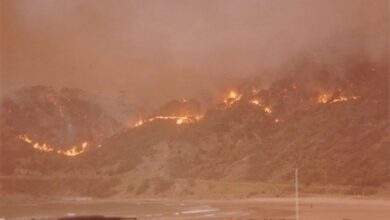
According to a scientific paper published in Annales Geophysicae in August 2018, Llanos described seeing a faint, whitish light in the northwestern sky at around 9 p.m. The glow initially resembled a distant fire, but its movement caught his attention.
In his account, Llanos described brighter points within the light and vertical movements that appeared to undulate. The display grew stronger and weaker before disappearing.
He estimated that the first occurrence lasted about five minutes. He also recorded a similar phenomenon near Gapang, which lasted approximately 10 minutes.
Llanos published his observations in 1857 under the title Observación de una aurora boreal en Manila, which translates to “Observation of an Aurora Borealis in Manila.”
The account was remarkable because the Philippines lies near the equator, far from the high-latitude regions where auroras are most commonly observed.
What Causes the Northern Lights?
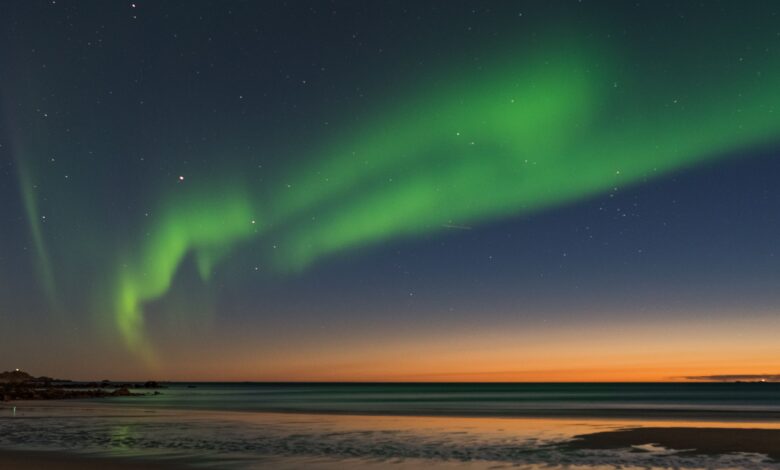
The aurora borealis, commonly known as the Northern Lights, forms when charged particles from the Sun interact with Earth’s magnetic field and upper atmosphere.
During periods of solar activity, some particles enter Earth’s near-space environment. Earth’s magnetic field guides many of them toward polar regions, where they interact with atmospheric gases and release energy as light.
Oxygen can produce green and red emissions, while nitrogen can contribute blue, purple, and pink hues. These interactions create the luminous curtains, arcs, and shifting colors associated with auroras.
Because Earth’s magnetic field generally directs auroral activity toward the polar regions, countries such as Norway, Finland, Canada, and Iceland are among the best-known places to witness the phenomenon.
An aurora borealis in the Philippines would be highly unusual because of the country’s geographic and geomagnetic position.
How Could It Appear So Close to the Equator?
Researchers Hisashi Hayakawa, José Vaquero, and Yusuke Ebihara examined Llanos’ historical account in their 2018 study published in Annales Geophysicae.
Their analysis concluded that the reported light was likely an auroral display. They discussed it as a possible example of a sporadic aurora, a rare phenomenon that can occur at unusually low magnetic latitudes.
The researchers described the historical record as the first evidence of a sporadic aurora in Southeast Asia and near the geomagnetic equator.
This does not mean the Philippines is a regular destination for the Northern Lights. Rather, the account suggests that auroral activity can occasionally extend much farther from the poles than usual.
Historical observations can help scientists investigate unusual space-weather events, particularly those recorded before modern instruments could measure solar activity and Earth’s magnetic environment.
READ: Philippine Agriculture Needs More Young Farmers
However, the sighting took place in the 19th century. Researchers therefore had to interpret Llanos’ written description using historical and scientific evidence, rather than relying on modern instrumental measurements of the event.
Could We See the Northern Lights in the Philippines Again?
Could another aurora in PH happen today? It remains possible under unusual geomagnetic conditions, but Filipinos should not expect to see the Northern Lights whenever solar activity increases.
Aurora visibility depends on several factors, including the intensity and configuration of geomagnetic activity, the location of the display, local weather, and sky conditions. Even powerful geomagnetic storms do not guarantee that an aurora will be visible from every low-latitude country.
For now, the 1856 record offers a fascinating link between Philippine history and space science. What began as a priest’s account of a strange light became a scientific clue that helped researchers investigate how far auroral activity can extend.
The aurora in PH may have been a rare event, but its record offers more than a glimpse into the past. It shows how a single observation from 1856 can help scientists uncover unusual phenomena and deepen our understanding of Earth’s atmosphere, even more than a century later.