Andres Bonifacio’s Education Goes Beyond the Classroom
While he is remembered as a leading figure of the Philippine Revolution, Andres Bonifacio’s education is an interesting part of his story to look at. Despite never attending secondary school, he became a devoted reader of history, literature, and politics. Beyond the Katipunan, his experiences show how curiosity and a willingness to learn can shape one’s understanding of the world.
Growing Up Without a Classroom
Born in Tondo, Manila on November 30, 1863, Bonifacio faced financial hardship early in life. After losing both parents, he took responsibility for raising his younger siblings. He sold handmade fans (abanikos) and walking sticks before working for British and German trading companies, and these family duties kept him from attending secondary school.
Still, he didn’t end there. He taught himself English and turned to books about history, literature, and society [at large].
The Books Behind the Ideas
Bonifacio was reportedly an avid reader of both foreign and local texts.
His collection included Victor Hugo’s Les Misérables, Alexandre Dumas’ The Count of Monte Cristo, and Eugéne Sue’s The Wandering Jew. He also studied accounts of the French Revolution, which explored the struggles of people against an established political system. Locally, he read historical works and writings by Jose Rizal, including Noli Me Tangere and El Filibusterismo.
These choices reflect a mind eager to understand social and political issues, and they show that he relied on independent study rather than a classroom.
Establishing the Katipunan
Andres Bonifacio’s education and further interest in Philippine society eventually became part of his involvement in the independence movement.
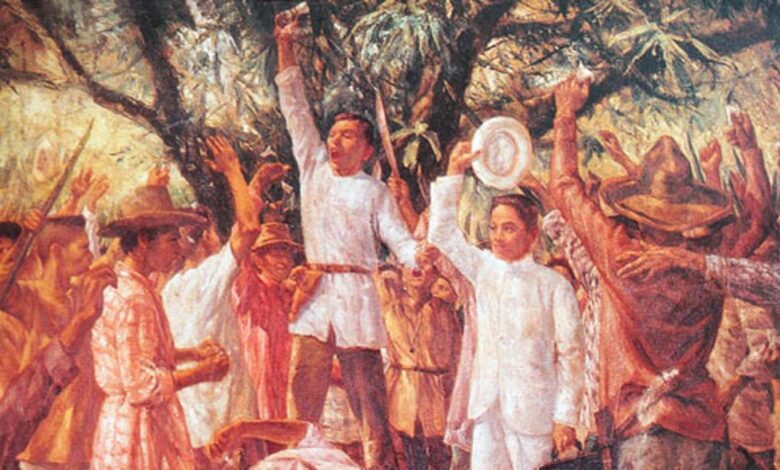
In July 1892, Bonifacio joined La Liga Filipina, an organization founded by Rizal that sought reforms under Spanish colonial rule. After Rizal’s exile to Dapitan, he helped establish the Kataastaasan, Kagalanggalang Katipunan ng mga Anak ng Bayan (KKK or Katipunan). The secret society aimed to win independence from Spain through armed revolution, and Bonifacio, as its Supremo, helped organize and lead Filipinos who wanted to end colonial rule.
READ: Remembering our Other National Hero: Andres Bonifacio
Andres Bonifacio’s education reminds us that learning doesn’t only happen inside a classroom. He also shows why knowledge should be accessible to everyone, since a person’s educational background doesn’t necessarily determine their ability to understand social issues, develop ideas, or contribute to their community. Overall, his determination to keep learning is a legacy worth remembering.