What Manila Can Learn From Jakarta’s China Playbook
Two countries face the same threat, but only one has a consistent strategy. Here’s what we could learn from Jakarta's China Playbook.
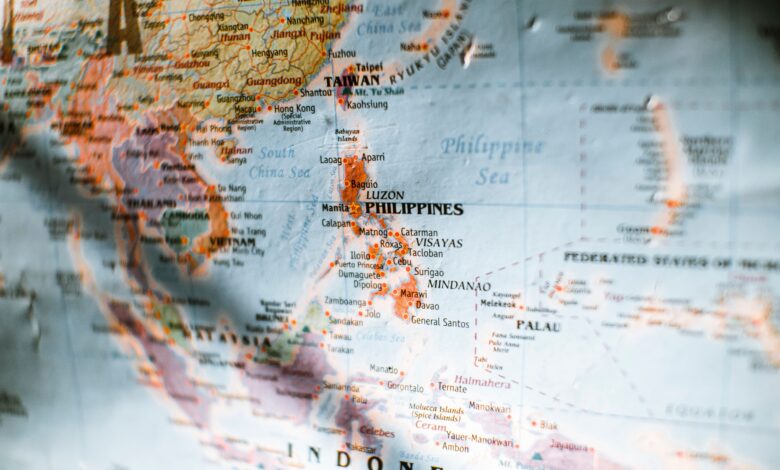
Indonesia and the Philippines share a lot in common. Both are archipelagos. They both have large, diverse populations. On top of that, they both carry the weight of colonial histories and periods of authoritarian rule. And both share a neighborhood with China — a neighbor increasingly difficult to ignore. But watch how each country handles that neighbor, and the similarities end fast. Let’s take a closer look at Indonesia’s China playbook.
Indonesia has a Plan.
Jakarta’s approach to Beijing follows a doctrine called bebas dan aktif, free and active. It means Indonesia engages with everyone, commits to no one, and keeps its options open. In practice, that looks like welcoming major Chinese infrastructure projects — the Jakarta-Bandung high-speed railway, investments in the new capital Nusantara — while maintaining a firm line on sovereignty and keeping sensitive sectors out of Beijing’s reach.
It is not a perfect system. When President Prabowo Subianto visited Beijing in November 2024, the joint statement notably left out any mention of the UN Convention on the Law of the Sea. Critics pointed out that Indonesia effectively became the first ASEAN country to sidestep UNCLOS in a statement to China. Even the most disciplined playbooks have their bad chapters.
Still, the overall posture has held. Indonesia’s foreign policy has stayed broadly consistent across administrations. Its military has enough institutional independence to hold firm on security matters even when economic ties with Beijing are warm.
The Philippines, by contrast, has been everywhere.
Under Benigno Aquino III, Manila took China to international arbitration, a confrontational move that produced a landmark 2016 ruling in the Philippines’ favor, which Beijing promptly ignored. Then Rodrigo Duterte pivoted sharply toward Beijing, deprioritizing the ruling and pursuing Chinese investment and loans. Then Ferdinand Marcos Jr. deepened the US alliance again and pushed back harder in the West Philippine Sea.
Each shift made sense in its own context. None of them added up to a strategy.
Part of this goes back to history. When Indonesia gained independence, the Dutch military presence left. However, the US stayed in the Philippines, bases, treaties, and all. That relationship shaped how each country learned to see itself in relation to outside powers. Indonesia built a foreign policy identity around non-alignment. The Philippines built one around alliance.
Neither is wrong. But non-alignment gives you more room to maneuver.
READ: Filipinos Make Up Nearly 30% of Guam’s Population
What would it actually look like to borrow from Jakarta’s China Playbook?
It does not mean copying Indonesia’s China playbook wholesale. The Philippines and Indonesia are not the same country, and the West Philippine Sea dispute is more directly existential for Manila than any maritime issue is for Jakarta right now.
What it means is this: engaging China on economics without handing over the legal and diplomatic high ground. Accepting investment where it serves Filipino interests while protecting sensitive sectors. And crucially, building a foreign policy that survives a change in leadership.
The Philippines holds the ASEAN chairmanship in 2026. That is a real window to shape regional conversations on development financing, on what it means to deal with China as one, rather than one-on-one. But that kind of influence requires a consistent position, not one that shifts depending on who won the last election.
China presents itself as a development partner, a fellow developing nation, a leader of South-South cooperation. That framing is worth taking seriously, because it works. Development aid and infrastructure investment can gradually reshape relationships and rules in ways that are hard to reverse once they take hold.
Jakarta has learned to engage with that offer without losing itself in it. Manila is still figuring out how.