
What Is Pax Silica and Why Is Everyone Talking About It?
Pax Silica could reshape the Philippines’ role in the global technology industry. But as negotiations with the United States continue, questions about national sovereignty, environmental protection, land rights, and the future of local communities are becoming harder to ignore.
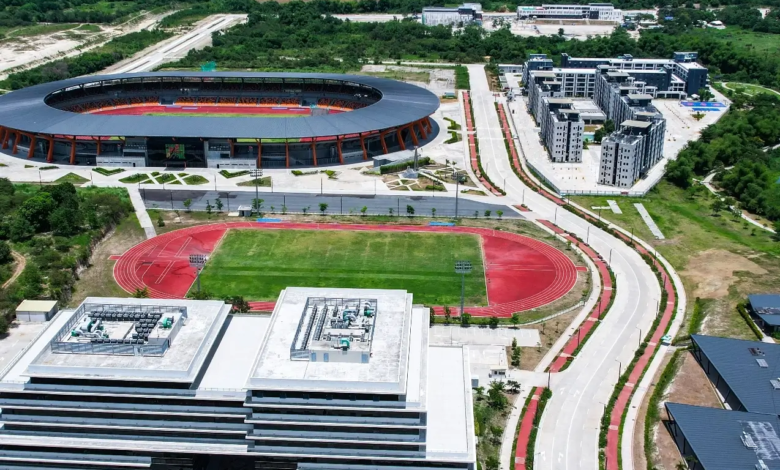
The proposed development would transform more than 4,000 acres (approximately 1,620 hectares) of New Clark City in Tarlac into an advanced manufacturing hub focused on semiconductors, critical minerals, and artificial intelligence (AI) technologies.
For the Philippine government, it represents an opportunity to attract billions in investments, create skilled jobs, and move the country higher up the global technology supply chain.
For its critics, however, the project raises serious questions about who will benefit from this development and what the country might have to sacrifice to make it happen.
With negotiations between Manila and Washington still underway, here’s what you need to know about Pax Silica and why it continues to attract national attention.
What Is Pax Silica?
Pax Silica is a proposed technology and manufacturing hub that aims to strengthen the Philippines’ role in the global semiconductor industry.
The name combines “Pax,” the Latin word for peace, and “silica,” a reference to silicon, the material used to make computer chips.
Those tiny chips power almost everything we use today, including smartphones, laptops, electric vehicles, medical equipment, and artificial intelligence.
The project’s centerpiece is the Golden Node, a massive industrial estate planned inside New Clark City.
Instead of exporting raw minerals and letting other countries manufacture high-value products, Pax Silica hopes to keep more of that process here in the Philippines.
In simple terms, the goal is to create more skilled jobs, attract global investors, and produce technology with higher economic value.
Why Is the Philippines Part of the Plan?
The Philippines already has experience in the semiconductor industry.
For decades, international companies have operated electronics and chip assembly facilities across the country. Electronics also remain one of the Philippines’ biggest exports.
Pax Silica hopes to build on that foundation.
Rather than focusing only on assembling chips, the project aims to attract companies involved in research, advanced manufacturing, AI infrastructure, and chip packaging.
The location also supports the government’s plan to strengthen the Luzon Economic Corridor, which connects Clark, Subic, Manila, and Batangas into a major economic zone.
The World Is Racing for Computer Chips
The Philippines isn’t entering this race alone.
Around the world, governments are investing billions because semiconductors have become one of the most valuable strategic industries on the planet. Computer chips now power nearly everything, from smartphones and hospitals to AI systems, electric vehicles, satellites, and national defense.
The United States passed the CHIPS and Science Act to bring semiconductor manufacturing back home.
Taiwan’s TSMC is investing billions in new fabrication plants overseas.
Malaysia continues expanding Penang’s reputation as one of Asia’s leading semiconductor hubs, while Vietnam and India are aggressively attracting technology investments of their own.
For the Philippines, Pax Silica represents an opportunity to become part of that growing industry instead of watching it happen elsewhere.
What Will Be Built in New Clark City?
Philippine officials describe the proposed Pax Silica development as an advanced manufacturing hub, not a cluster of large AI data centers.
Philippine Ambassador to the United States Jose Manuel Romualdez reiterated on November 19 that data centers were not part of the proposed development.
Instead, the focus would be on critical mineral processing, semiconductor manufacturing, and the production of components used in computers, electric vehicles, and other advanced technologies.
The proposed development covers about 4,000 acres in New Clark City.
Government officials have discussed the possibility of attracting substantial foreign investment through the project, although the actual industries, participating companies, and specific facilities will depend on the final agreement and development plans.
This distinction matters because manufacturing facilities and large-scale data centers have different infrastructure requirements, particularly when it comes to electricity and water consumption.
What Has Happened to the Pax Silica Agreement?
The proposed agreement between the Philippines and the United States has become one of the most closely watched aspects of the initiative.
In July 2026, the Philippine government expressed hopes of finalizing the agreement within the year. The proposed framework would establish the terms and conditions for developing the advanced manufacturing hub.
However, the agreement was not signed during the November ASEAN Summit or US President Donald Trump’s November 17–18 visit to Manila.
On November 18, President Ferdinand Marcos Jr. confirmed that the two countries would not discuss or sign the agreement during Trump’s visit.
The announcement followed an earlier statement from US Ambassador to the Philippines Lee Lipton that no major announcement on Pax Silica was scheduled during the summit.
Despite the delay, the Philippine government maintains that negotiations are moving forward.
On November 10, DTI Undersecretary and Board of Investments managing head Ceferino Rodolfo said the legal framework was still expected to be signed before the end of 2026.
He explained that the government wanted the initiative to have its own dedicated announcement rather than compete with other major diplomatic discussions during the ASEAN Summit.
As of November 20, however, no final agreement has been signed.
The proposed two-year development and master-planning period is still being discussed, but its timeline depends on the successful conclusion of negotiations.
What Could Filipinos Gain?
If the project moves forward successfully, the biggest benefit could be jobs.
Large technology hubs need more than engineers. They also create work for technicians, electricians, construction workers, logistics companies, software developers, equipment suppliers, maintenance providers, and many small businesses that support daily operations.
Pax Silica could also help the Philippines earn more from its own natural resources.
Today, many minerals leave the country before they’re turned into higher-value products. Processing more of them locally could keep more jobs, investment, and economic activity in the Philippines.
Large investments like this often lead to better roads, power systems, internet connectivity, and other infrastructure that benefit nearby communities as well.
Why Are Filipinos Opposing Pax Silica?
Despite the government’s economic promises, Pax Silica has faced growing opposition from environmental groups, farmers, Indigenous communities, students, and other organizations.
Much of the criticism centers on the potential effects of large-scale industrial development on local resources and communities.
Environmental Concerns
Large industrial facilities require reliable electricity, water, transportation, and other essential infrastructure.
Environmental advocates worry that developing an industrial hub of this scale could put additional pressure on local water sources, energy systems, and surrounding ecosystems.
There are also questions about the environmental consequences of critical mineral processing, particularly if the development encourages more intensive mining activities.
Another important issue involves environmental assessments.
In August 2026, the Department of Environment and Natural Resources (DENR) clarified that no environmental impact assessment had been applied for or processed specifically for Pax Silica at that time.
The agency explained that an existing environmental compliance certificate covered the broader BCDA development plan, not the specific projects proposed under Pax Silica.
Individual projects would still need to undergo the appropriate environmental assessment and secure the necessary permits.
Land Rights and Indigenous Communities
The proposed development has also raised concerns about the rights of farmers and Indigenous communities, particularly the Aeta people living in and around parts of the New Clark City development area.
Community advocates have questioned whether local residents have been adequately consulted and whether their ancestral lands and livelihoods will be protected.
These concerns gained further attention in November when Catholic bishops joined Indigenous communities and farmers in raising objections to developments they believe could threaten ancestral lands, watersheds, and local livelihoods.
The Philippine government has maintained that the proposed hub will occupy designated development areas and that affected communities will receive appropriate assistance and protection.
However, questions about meaningful consultation, land ownership, and community consent remain part of the ongoing debate.
Protests and Public Opposition
Opposition to Pax Silica became more visible ahead of Trump’s November visit.
Protesters gathered in several parts of the country to question the initiative, particularly its implications for national sovereignty, environmental protection, and Indigenous rights.
The demonstrations also drew attention to the government’s handling of public dissent.
According to reports from November 17, more than 200 individuals had been arrested in connection with protests surrounding the US president’s visit and the Pax Silica initiative.
The controversy has since become part of a broader national discussion about foreign investment, economic development, and the country’s ability to protect its own interests.
The Bigger Question
Big investments can change a country’s future. But their success isn’t measured by how much money they attract or how many factories they build.
The real question is who gets to benefit from that future, and what it costs to build it.
As the debate over Pax Silica continues, Filipinos might ask: who truly gains from this progress, and what are we willing to give up in return?


One Comment