What Is Pax Silica and Why Is Everyone Talking About It?
Pax Silica asks a question that could shape the Philippines for decades: can the country become a global technology hub without sacrificing the very resources that make it worth investing in?
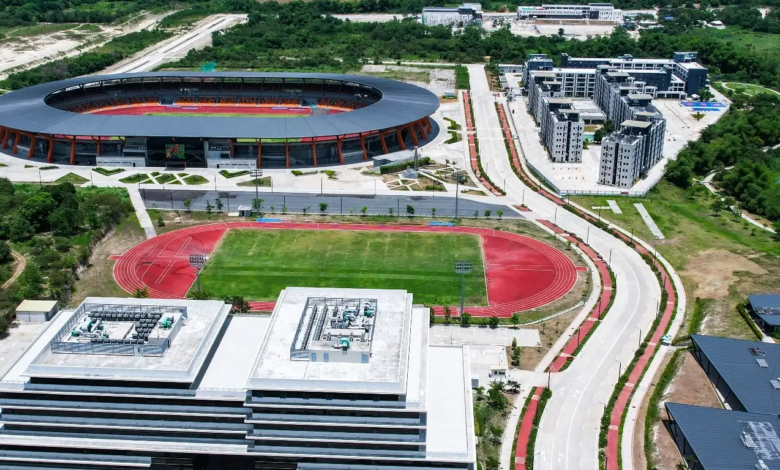
The proposed project would transform more than 4,000 acres (1,620 hectares) of New Clark City into one of Southeast Asia’s largest centers for artificial intelligence, semiconductor manufacturing, and advanced technology.
To some, it’s a once-in-a-generation opportunity. To others, it’s a reminder that economic progress often comes with difficult trade-offs.
So what is Pax Silica, and why has it sparked such intense debate across the country?
What Is Pax Silica?
Pax Silica is a proposed technology and manufacturing hub that aims to strengthen the Philippines’ role in the global semiconductor industry.
The name combines “Pax,” the Latin word for peace, and “silica,” a reference to silicon, the material used to make computer chips.
Those tiny chips power almost everything we use today, including smartphones, laptops, electric vehicles, medical equipment, and artificial intelligence.
The project’s centerpiece is the Golden Node, a massive industrial estate planned inside New Clark City.
Instead of exporting raw minerals and letting other countries manufacture high-value products, Pax Silica hopes to keep more of that process here in the Philippines.
In simple terms, the goal is to create more skilled jobs, attract global investors, and produce technology with higher economic value.
Why Is the Philippines Part of the Plan?
The Philippines already has experience in the semiconductor industry.
For decades, international companies have operated electronics and chip assembly facilities across the country. Electronics also remain one of the Philippines’ biggest exports.
Pax Silica hopes to build on that foundation.
Rather than focusing only on assembling chips, the project aims to attract companies involved in research, advanced manufacturing, AI infrastructure, and chip packaging.
The location also supports the government’s plan to strengthen the Luzon Economic Corridor, which connects Clark, Subic, Manila, and Batangas into a major economic zone.
The World Is Racing for Computer Chips
The Philippines isn’t entering this race alone.
Around the world, governments are investing billions because semiconductors have become one of the most valuable strategic industries on the planet. Computer chips now power nearly everything, from smartphones and hospitals to AI systems, electric vehicles, satellites, and national defense.
The United States passed the CHIPS and Science Act to bring semiconductor manufacturing back home.
Taiwan’s TSMC is investing billions in new fabrication plants overseas.
Malaysia continues expanding Penang’s reputation as one of Asia’s leading semiconductor hubs, while Vietnam and India are aggressively attracting technology investments of their own.
For the Philippines, Pax Silica represents an opportunity to become part of that growing industry instead of watching it happen elsewhere.
What Could Filipinos Gain?
If the project moves forward successfully, the biggest benefit could be jobs.
Large technology hubs need more than engineers. They also create work for technicians, electricians, construction workers, logistics companies, software developers, equipment suppliers, maintenance providers, and many small businesses that support daily operations.
Pax Silica could also help the Philippines earn more from its own natural resources.
Today, many minerals leave the country before they’re turned into higher-value products. Processing more of them locally could keep more jobs, investment, and economic activity in the Philippines.
Large investments like this often lead to better roads, power systems, internet connectivity, and other infrastructure that benefit nearby communities as well.
Why Are People Concerned?
The promise of economic growth comes with important questions.
Semiconductor manufacturing and AI facilities use large amounts of electricity and water. Critics worry existing utilities may struggle to support a project of this size unless major upgrades are made.
Environmental groups have also raised concerns about forests, biodiversity, and nearby watersheds.
Others worry about farmland, while indigenous advocates have called for stronger protection of ancestral domains and meaningful consultation with Aeta communities living near parts of the proposed site.
These concerns don’t necessarily mean people oppose development.
Many simply want to make sure progress doesn’t come at the expense of the environment or local communities.
The Bigger Question
Big investments can change a country’s future. But their success isn’t measured by how much money they attract or how many factories they build.
The real question is who gets to benefit from that future, and what it costs to build it.
As the debate over Pax Silica continues, Filipinos might ask: who truly gains from this progress, and what are we willing to give up in return?