Romualdez Plunder Case Tests Marcos’ Accountability Promise
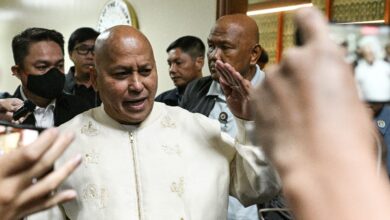
The arrest of former House Speaker Martin Romualdez has brought the flood control corruption controversy to a critical juncture. But beyond the criminal charges, his case raises questions about President Ferdinand Marcos Jr.’s promise to hold even his closest allies accountable.
Romualdez, Marcos’ first cousin and a former key figure in the administration’s legislative agenda, is facing a plunder case over an alleged ₱7.4-billion kickback scheme involving flood control projects. His arrest has shifted attention from the investigation to the judicial proceedings that will determine his legal fate.
Following his arraignment on September 25, Romualdez filed a petition for bail, with the Sandiganbayan scheduling hearings to begin on October 12. The court will examine the prosecution’s evidence to determine whether it can grant the former House Speaker temporary liberty while the case proceeds.
The proceedings mark a significant stage in a controversy that has put public infrastructure spending and government accountability under scrutiny.
The legal battle ahead
Romualdez’s petition for bail is among the first major hurdles in the case. Since plunder is punishable by reclusion perpetua, bail is not a matter of right when the evidence of guilt is strong. The prosecution must therefore present evidence to establish whether Romualdez should remain in detention while awaiting trial.
The outcome of the bail hearings, however, will not determine his guilt or innocence. That question will be resolved through the trial, where the prosecution must establish the charges beyond reasonable doubt.
The distinction is important as the case unfolds. An arrest warrant and the filing of criminal charges do not constitute a conviction. Romualdez is entitled to due process, just as the public has a legitimate interest in seeing the allegations thoroughly investigated.
The court proceedings will also test the strength of the evidence behind the allegations, including the claimed financial transactions and the respective roles of those implicated.
Marcos’ promise of accountability
Romualdez’s arrest also puts Marcos’ public statements on corruption under renewed scrutiny.
In his July 2026 State of the Nation Address, the President pledged to pursue accountability in the government’s anti-corruption campaign, declaring that family and political connections should not place anyone beyond the reach of the law.
That commitment now carries particular significance given Romualdez’s relationship with the President. As his cousin and a prominent administration ally, the former House Speaker occupies a position that makes the case politically consequential, even as the judicial proceedings remain independent of the President’s declarations.
Marcos has dismissed suggestions that Romualdez’s arrest was staged for political purposes, maintaining that those responsible for wrongdoing must face the consequences.
Still, public declarations alone cannot establish the credibility of an anti-corruption campaign. Its substance will depend on whether authorities allow investigations to proceed transparently, subject the evidence to judicial scrutiny and hold those found guilty accountable, regardless of their political affiliations.
The President’s relationship with Romualdez makes the administration’s handling of the broader controversy a legitimate subject of public examination. However, that relationship, on its own, is not evidence of the President’s involvement in the alleged scheme.
Beyond one former House Speaker
The alleged ₱7.4-billion kickback scheme concerns public infrastructure projects funded through successive national budgets. To establish how the alleged transactions took place, investigators must examine not only the accused. But also the processes through which officials approved, funded and implemented the projects.
The case also underscores the importance of determining whether existing oversight mechanisms adequately protected public funds. Arresting those accused of corruption addresses individual criminal allegations. But it does not automatically resolve the institutional weaknesses that may have allowed irregularities to occur.
For the public, the consequences extend beyond the legal fate of a former House Speaker. Flood control projects are intended to protect communities from flooding. Making the proper use of their budgets a matter of public safety as well as financial accountability.
The investigation must therefore establish the extent of the alleged wrongdoing and identify everyone for whom there is sufficient evidence to warrant prosecution. Accountability should neither stop at politically convenient targets nor extend to individuals without evidence of wrongdoing.
READ: Engineers of Corruption: Like Father, Like Son
What happens next?
The October 12 bail hearings will provide the next significant development in Romualdez’s case. The Sandiganbayan’s assessment of the prosecution’s evidence will determine whether he remains in detention while awaiting trial.
What remains is a legal process that must be allowed to run its course and a broader public obligation to ensure that allegations involving billions in public funds receive thorough and transparent scrutiny. The credibility of the government’s anti-corruption efforts will depend not on whom it arrests alone, but on whether the evidence is pursued consistently and the institutions responsible for accountability are allowed to do their work.