Safe Na Ba Sa Las Piñas?
Flooded streets, a campus tragedy, a fired DPWH official. Las Piñas residents are asking a simple question and they deserve a straight answer.
There’s a question quietly making its way through the barangays of Las Piñas right now, passed between neighbors in flooded streets:
Safe pa ba tayo dito?
It’s a simple question. Residents ask it not out of panic. They ask it because the last few months have given them legitimate reasons to. And they still don’t have enough legitimate answers.
The Water Keeps Coming Back
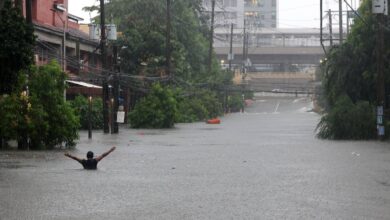
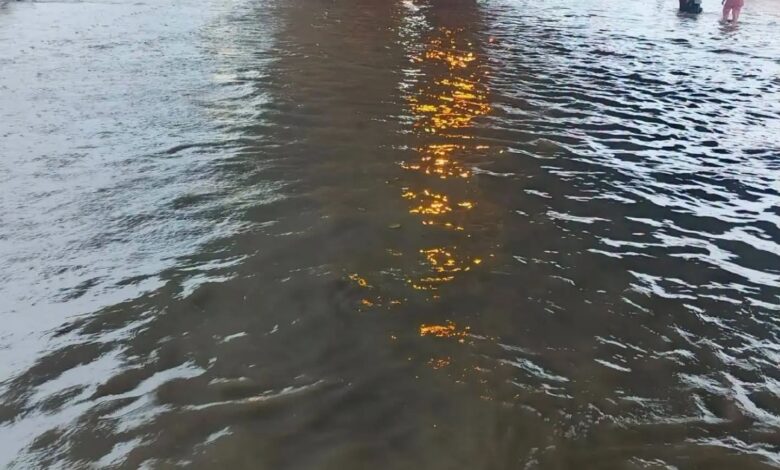
On August 29, 2026, Zapote Junction was once again impassable. Pedestrians waded through knee-deep floodwater while a Las Piñas DRRMO truck worked to assist stranded individuals. Photos circulated on social media. The images were familiar, because they always are.
Las Piñas was among nine cities in Metro Manila that severe flooding hit that day. Zapote Junction recorded knee-deep water, impassable to all vehicles. For longtime Las Piñas residents, this intersection needs no introduction. It floods every year. Not occasionally. Not only during super typhoons. With a regularity that has made it a reliable feature of every rainy season. Streets that residents know by heart become rivers they have to calculate before leaving home.
What made August 29 different wasn’t the flooding itself. It was what came after.
Residents Already Knew
Public Works Secretary Vince Dizon relieved the maintenance chief of the DPWH Las Piñas-Muntinlupa District Engineering Office. The reason: repeated reports of slow response and lack of urgency. The memo stated it plainly. “Unsatisfactory performance, lack of urgency and delayed response to calamities.”
That dismissal is, in theory, accountability. In practice, it confirms what residents already knew. The response had been inadequate. Someone had to issue a formal directive before it changed. The flooding didn’t start in August. Neither did the inadequacy. Residents had been living with both long before anyone signed a memo.
President Marcos, visiting the area, acknowledged that flooding in Las Piñas had become less severe due to dredging and drainage efforts. He admitted, however, that more work was still needed. He noted that dredging stopped for 12 years due to a moratorium, causing rivers and spillways to gradually grow shallower.
Kulang pa rin after all this time.
The Safety Question Goes Beyond Floodwater
Flooding is the most visible problem. But it isn’t the only one Las Piñas residents are dealing with right now.
Earlier this August, a tragic incident at San Jose National High School forced the suspension of face-to-face classes while authorities responded. The Department of Education reaffirmed its commitment to campus safety through enhanced security measures and expanded mental health support. That response was the right one, and it deserves full follow-through. But the incident landed on a community that was already exhausted and already on edge.
What Residents Are Really Asking For
A school that should be a safe space. Streets that should be passable. These are not extraordinary demands. They are the baseline of what a functioning local government delivers for its residents.
Residents of Las Piñas are not asking for miracles. They are asking for maintenance. Drainage that works. Response times that don’t require a national directive to trigger. Schools where children feel secure. Streets where families don’t calculate flood depth before deciding to leave the house.
The Reclamation Question Nobody Has Fully Answered
Underneath the flooding conversation in Las Piñas sits a longer, more complicated debate. It has run for over a decade. And it grows more urgent every time Zapote Junction disappears underwater.
The Las Piñas-Parañaque Coastal Bay Reclamation Project covers 530 hectares of Manila Bay coastline. Courts contested it. The Supreme Court ultimately approved it. But delays have repeatedly stalled it since. The environmental argument against it is straightforward. Reclamation along that stretch of coastline would obstruct the natural outflow of the Las Piñas-Zapote and Parañaque rivers into Manila Bay.
Senator Cynthia Villar has consistently warned that pushing reclamation forward would worsen flooding in the city. She cited a former DPWH secretary’s assessment that the project could raise floodwater levels in Las Piñas by up to eight meters. “Gusto mo ba kaming bahain ng eight meters?” she said in one Senate hearing. It was blunt, but grounded in a technical reality. When developers build land directly in front of river mouths, the water loses its exit. It goes somewhere else. That somewhere else is the streets and homes of Las Piñas residents.
Furthermore, her opposition centers on the Las Piñas-Parañaque Wetland Park. This protected area sits at the mouth of those rivers. It is home to migratory birds and fish spawning grounds. The wetland is not just an environmental asset. It also works as a natural buffer. Developing over it narrows the river outflow. Water that once drained into the bay backs up into the city instead.
The reclamation debate will continue. It carries legal, economic, and political dimensions that won’t resolve in a single news cycle. Nevertheless, the flooding happening right now is not an abstract future risk. It is a present reality. Any serious conversation about why Las Piñas keeps flooding has to eventually reckon with what sits between those rivers and the bay.
RELATED: WE KEEP BUILDING ROADS. WHERE IS THE FLOOD CONTROL?
What Residents Are Owed
Las Piñas is not a poor city. Generations of residents built and maintained its infrastructure and community. It has produced senators. It sits at the edge of Manila Bay with everything it needs to be a well-functioning, livable city.
And yet its residents still wade through Zapote Junction every August. They still wait for emergency trucks that arrive late, and for children to reach schools that, this year, became the site of a tragedy.
They deserve more. Specifically, they deserve a conversation about the city’s future that puts their safety first.
Safe na ba sa Las Piñas?
Not yet. But at the very least, the city’s leaders should be honest about that. And act like the answer actually matters.