Community waste management takes root in Las Piñas
Las Piñas City once struggled with rivers that clogged with garbage, coconut husks, and waterlilies, and the blockages worsened flooding. Over the past two decades, residents, the city government, and private groups responded with community waste management, treating those materials as inputs for new products.
The Villar Foundation, established by former Senate President Manny Villar and former Senator Cynthia Villar, launched its Sagip Ilog river program in 2002, and several of the city’s waste projects grew from it.
Community waste management begins with household scraps
One Las Piñas barangay found that kitchen and garden scraps made up a large share of what households threw away. Barangay composting centers respond by mixing the scraps with coconut dust and turning them into organic fertilizer.
The compost reaches farmer groups in nearby provinces and urban gardeners, and composting sites now operate in nearly every barangay in the city.
Handicraft traditions give river waste a second life.
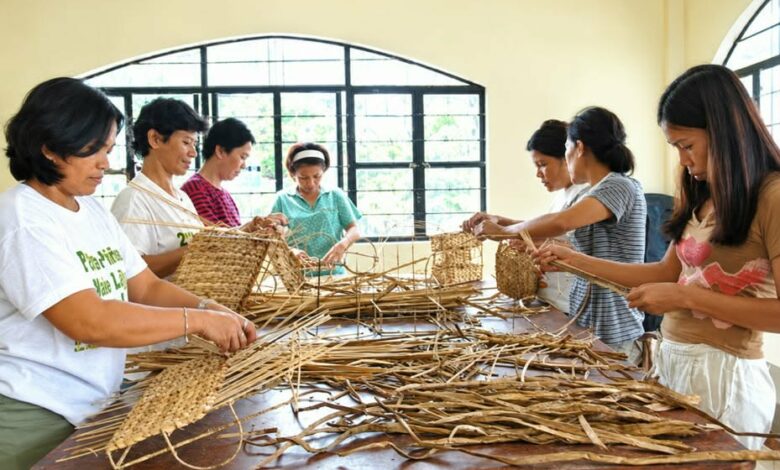
A craft culture already existed in Las Piñas, including generations of parol makers, and river waste fit into it. Waterlilies that obstructed the rivers now supply a weaving center that produces baskets, bayong, mats, and slippers. In 2011, the city announced plans to send weavers to Cotabato City, where waterlilies had blocked a river, to teach residents the craft.
Buko vendors’ discarded coconut husks become coconets, which the city says outlast plastic netting on riverbanks. The foundation and the city government have also organized a Water Lily Festival that includes street-dancing contests.
In 2013, the foundation opened a plant in Barangay Ilaya that molds soft plastics, such as food wrappers, into school armchairs for public schools. Plants in Iloilo and Cagayan de Oro followed in 2017, and the Ilocos Norte provincial government has toured the Las Piñas facility while planning its own recycling machinery.
READ: Zero Waste Stores: A Guide to Eco-Friendly Shopping
What it suggests for other communities
Taken together, the projects show that local waste can support steady work when each material has a clear next use. The river itself remains unfinished business: Cynthia Villar has said it no longer matches its condition in the 1970s, and the foundation describes the cleanup as a continuing effort rather than a one-time campaign.