6 Dugongs Were Spotted in Sultan Kudarat. Here Are 4 Things to Know About Them
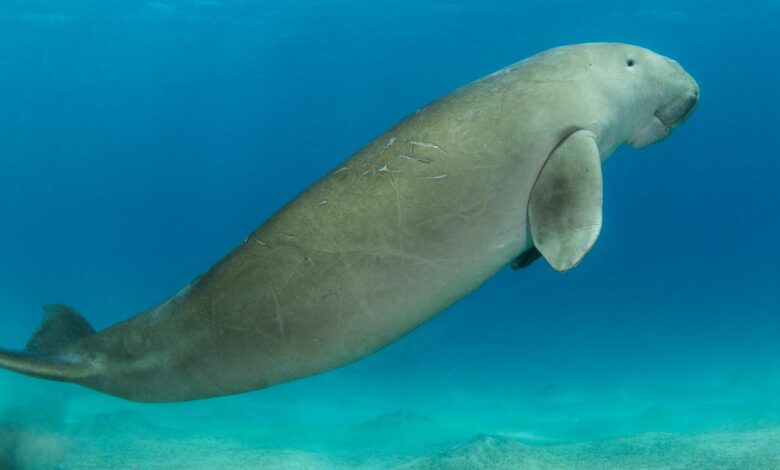
Six dugongs and five green sea turtles were recently spotted foraging off the coast of Kalamansig, Sultan Kudarat. The animals were documented by the Department of Environment and Natural Resources (DENR) using a drone during a marine wildlife monitoring activity on October 21, 2026. The survey covered the Poral shoreline, including parts of Barangays Santa Maria and Cadiz.
The sighting caught attention for a reason. Dugongs, sometimes called sea cows, are elusive marine mammals that depend on healthy coastal habitats to survive. And while seeing six in one area is encouraging, it also offers a chance to learn more about an animal many Filipinos may recognize by name but know little about.
1. Dugongs Depend on Seagrass for Food
Dugongs are herbivorous marine mammals that depend primarily on seagrass. They are often called sea cows because they graze on underwater meadows of these flowering plants, which grow in shallow coastal waters where sunlight can reach the seabed.
Seagrass meadows also support other marine life, provide nursery grounds for fish, and store carbon. Because dugongs rely on these habitats for food, damage to seagrass beds can threaten their survival.
2. Their Snouts Help Them Feed on the Seafloor
A dugong’s distinctive downturned snout is adapted for grazing along the seabed. Sensitive bristles on its large, fleshy upper lip help it locate and grasp seagrass.
As dugongs feed, they can uproot entire plants and leave visible trails in seagrass beds. These traces can offer clues about feeding activity, although the Kalamansig sighting report does not say that researchers used feeding trails to identify or count the animals.
3. Dugongs Are Related to Elephants, Not Whales
Despite spending their lives in the sea, dugongs are more closely related to elephants than to whales or dolphins. They belong to the mammalian order Sirenia, which also includes manatees. Manatees are their closest living relatives within this group.
Dugongs are the only living members of the family Dugongidae. Their evolutionary connection to elephants may seem surprising, but it is well established in mammalian biology.
4. They Reproduce Slowly, Making Recovery Difficult
Dugongs reproduce slowly. Females typically give birth to one calf after a pregnancy lasting around 13 to 15 months. Under ideal conditions, they may give birth only once every three to seven years.
This slow reproductive rate makes dugongs vulnerable when their numbers decline. Threats include damage to seagrass habitats, accidental capture in fishing gear, vessel strikes, and pollution. Because populations can take a long time to recover, protecting both the animals and their feeding grounds is essential.
ALSO READ: Recycled Life Jacket: Turning Plastic Bottles into Lifesavers
Why Dugongs in Sultan Kudarat Need Protected Habitats
The sighting of dugongs in Sultan Kudarat is a reminder of the marine wildlife that depends on the Philippines’ coastal ecosystems. However, seeing six dugongs in one survey does not necessarily mean the population is growing. Continued monitoring is needed to understand how frequently these animals visit the area.
Protecting dugongs also means protecting the seagrass beds they rely on. Keeping coastal habitats healthy, avoiding activities that harm marine wildlife, and reporting sightings or suspected violations to authorities can all support conservation efforts.
The recent sighting offers a glimpse of the wildlife living off Sultan Kudarat’s coast. The next challenge is ensuring these waters remain a place where dugongs can continue to feed, breed, and survive.