How Does Losing Philippine Coral Reefs Affect Our Food Supply?
Philippine coral reefs may seem like a concern for marine wildlife alone, but their decline could also affect the food on our plates. Especially in a country where many coastal communities depend on fishing for food and income, losing reefs could strain local fisheries and seafood supply.
Background
The International Union for Conservation of Nature (IUCN) warns that 96% of the world’s shallow-water coral reef systems are critically endangered and could disappear by 2075, including the Coral Triangle, a marine biodiversity hotspot that covers Philippine waters. With climate change warming oceans and triggering bleaching, their future continues to be uncertain.
Coral Reefs as Habitats
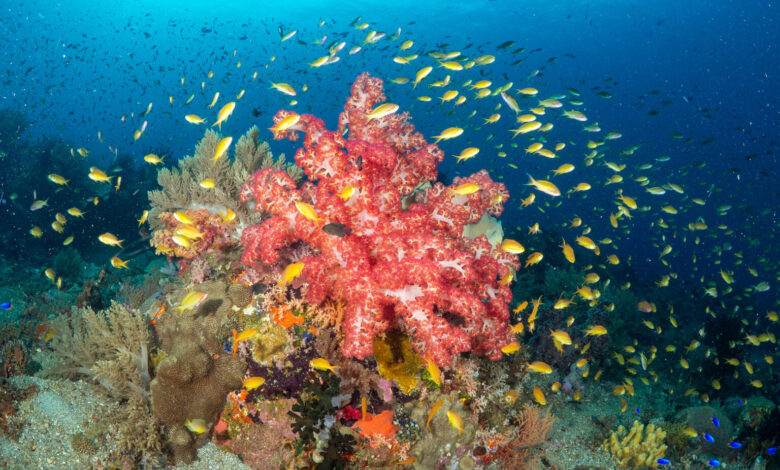
Philippine coral reefs are among the world’s most diverse marine ecosystems, providing shelter, feeding grounds, and breeding habits for many fish species. Healthy reefs sustain the fish populations that support local fisheries and feed coastal communities.
Disruption
When corals endure prolonged heat stress, they expel the algae living in their tissues and turn white, known as coral bleaching. Without recovery, they can die, and complex reef structures may be replaced by algae, rubble, and sponges, leaving fewer habitats for reef-associated species.
Over time, this can affect the fisheries that depend on them, and overfishing and destructive fishing practices can make the problem worse.
READ: Coral Reefs at Risk: What’s Being Done to Protect Them?
When Production is Not Security
Even when fish are caught locally, communities do not necessarily benefit from the whole catch.
A 2025 study in Communications Earth & Environment looked at small-scale fisheries in five coastal districts of Palawan and found that residents’ fish consumption was not necessarily tied to local production, partly because a significant share of the catch, particularly reef fish, was exported.
Meanwhile, pelagic fish and soft-bottom species were more affordable, less often exported, and more accessible to local households. That being said, fish in local waters does not guarantee local access.
Protecting Food Sources
Marine protected areas, responsible fishing practices, and reduced marine pollution can ease pressure on reefs. But conservation must also tackle climate change, which keeps threatening reefs through rising temperatures and more frequent heat waves. The IUCN stresses that cutting emissions, strengthening protection, and investing in restoration are essential to helping corals recover.
In our case, protecting Philippine coral reefs is more than just preserving biodiversity. It is also about sustaining fisheries, supporting coastal communities, and safeguarding a food source many Filipinos rely on.