The Laperal White House: A Haunting From the Past
The Laperal White House in Baguio City has been at the center of the Philippines’ best-known ghost stories for decades. The Victorian-style mansion on Leonard Wood Road draws curious travelers, ghost hunters, and history buffs, sending many home with a story to tell.
Hard facts about the house are few, and the legends fill the gap. This account separates what sources document from what locals and visitors say.
A history shrouded in mystery
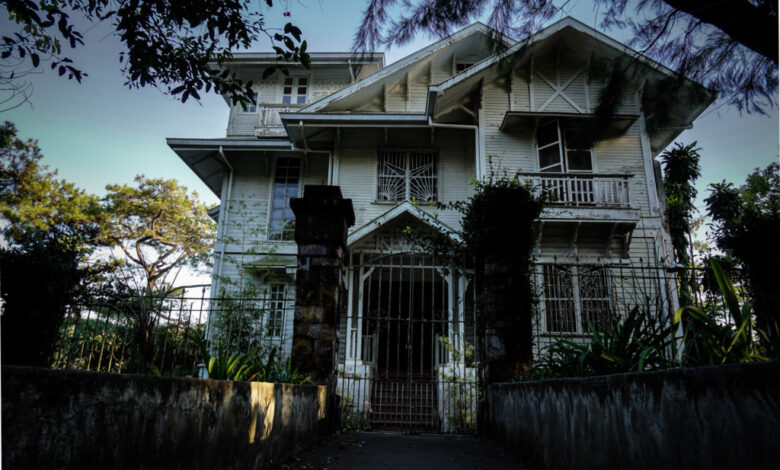
Roberto Laperal and his wife, Victorina, built the mansion as a vacation home in Baguio, the cool-weather retreat favored by well-off families. Accounts differ on whether it went up in the 1920s or the 1930s. Builders used narra and yakal, two dense Philippine hardwoods, and gave the house steep rooflines, gables, and wide windows. The exterior began as beige before a coat of white paint gave the place its nickname.
The war changed everything. Japanese forces occupied Baguio in the 1940s, and the Laperal family lost the use of its home. Locals say soldiers turned the house into a garrison, where they tortured and killed suspected spies. Residents have passed these accounts down mostly by word of mouth, often in hushed tones, and few records confirm them.
Some tellers say the house had an uneasy reputation even before the occupation. ABS-CBN News, citing Kyodo News, noted that locals and occult enthusiasts already viewed it with dread. GMA’s I-Witness once sent host Jay Taruc and a group of psychics inside to sense what lingers there, and the program stressed that no one really knows what became of the family.
The legends locals tell
The best-known story, recounted by The Philippine Star, centers on a little girl who ran into the road after her nanny and died when a speeding car hit her. Locals say she still stands outside the house at night, waiting. The nanny, who died decades later, is believed to have returned to stay with her, and people report a long-haired woman at a second-floor window. Some accounts place a woman in white at the windows.
Visitors and ghost hunters add details of their own: sudden chills on the stairs, a feeling of being watched, footsteps in empty hallways, and the laughter of children. A Baguio tour guide quoted by Kyodo News said the city’s supposed spirits seldom hurt anyone. At most, he said, they tug at a person’s hair or shirt.
Ghost hunters and skeptics
Paranormal groups have tested the house with recorders, cameras and electromagnetic field meters. Some claim to have captured a faint voice murmuring “tulong,” the Tagalog word for help. Others point to photos showing orbs or a shadowy figure in a military uniform, which they link to the war years. These claims rest on the ghost hunters’ own accounts, and none has been independently verified.
Skeptics offer plainer explanations. Orbs in photos usually come from dust or camera flash, and chills come easily in a drafty wooden house in a mountain city. One travel blogger who toured the gallery in 2013 wrote that she found art rather than anything paranormal, even though most visitors came for the ghost stories.
READ: They Say Bahay na Pula Is Haunted. Its History Is Even More Terrifying.
From gallery to dining room
The house outlasted the war and the deadly 1990 earthquake that brought down larger, newer buildings in the city. Business tycoon Lucio Tan bought it in 2007 and reportedly never stayed there. His son has said the family warned the tycoon that the place was full of spirits, and Tan waved off the concern.
Later, the Tan Yan Kee Foundation opened the house as a gallery of Ifugao bamboo carvings, and a horror film titled White House was shot inside. In December 2022, Joseph’s opened in the house, a fine-dining restaurant serving French-inspired dishes by reservation. A facelift left the exterior no longer all white.
Today, the mansion plays two roles. It stands as a piece of Baguio’s built heritage, and it serves as a stage for the city’s ghost lore. The Daily Tribune recently noted that Baguio’s haunting tales live on beyond Halloween. Whether visitors come to dine, to investigate, or to see an old landmark, they walk into a building where history and rumor have grown together for decades.