Why Post-Harvest Loss Is a Crisis for Philippine Food Security
Global conflicts are reshaping the economics of food. Rising fuel costs, disrupted shipping routes, and volatile fertilizer prices have tightened supply chains worldwide. Import-dependent economies like the Philippines are absorbing the consequences.
But while the external pressures draw the most attention, a quieter problem continues to brew from within.
The Philippines Loses Food Before It Leaves the Farm
Post-harvest loss is not a new problem, but deteriorating global conditions have made it harder to ignore. Perishable goods such as fruits, vegetables, fish, and meat spoil before reaching distribution centers. Often because the infrastructure cannot support the required pace and volume of movement.
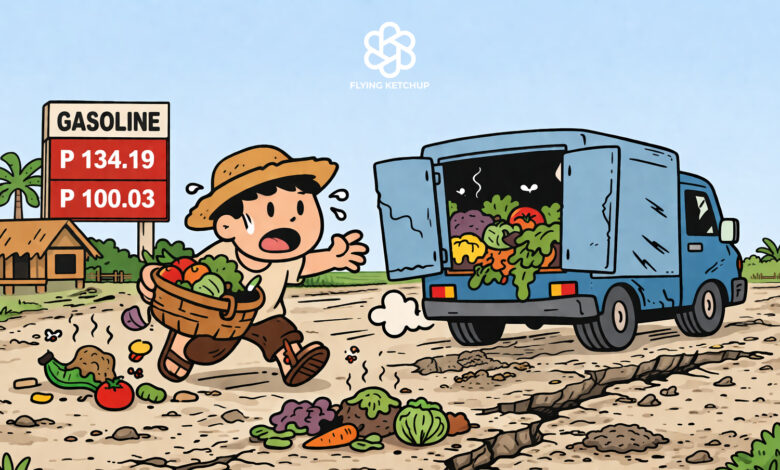
Farmers caught between poor market timing and rising logistics costs frequently sell immediately after harvest regardless of price. In some cases, produce is left unharvested entirely when transport and labor expenses outweigh projected returns. Conflict-driven oil price spikes have compounded this further, with reports of farmers abandoning crops when fuel costs make delivery economically unviable.
Inadequate Cold Storage Keeps the Supply Chain Vulnerable
Temperature-controlled storage is among the most direct tools available for reducing spoilage. Yet its availability across major agricultural regions remains inadequate. Without cold chain coverage, perishable goods must be moved quickly, or they will be lost. Agriculture officials have identified this gap as a driver of supply volatility. Oversupply during peak harvest periods gives way to shortages months later, creating price swings that affect both farmers and consumers.
The problem does not stop at storage capacity alone. Weak farm-to-market roads and fragmented regional logistics networks limit the effectiveness of even existing cold facilities. Distribution bottlenecks extend spoilage windows and reduce the practical value of production gains. How much food reaches markets is determined not only by how much is grown, but by how reliably it moves through the system.
Legislative Attention Is Turning Toward Structural Solutions
Reducing post-harvest losses has been framed by agriculture planners as a way to increase effective food supply without expanding land use or production inputs.
In February 2025, Sen. Mark Villar called for increased government and private sector investment in cold storage facilities, farm-to-market roads, and processing centers, citing post-harvest losses as a significant driver of food waste and price instability. The proposal also included incentives for businesses entering the cold chain market and legislative measures to accelerate infrastructure development across agricultural regions.
Stronger public-private collaboration, combined with targeted budget allocations, points toward a structural approach. Rather than one reliant on import adjustments or short-term subsidies. Whether that legislative momentum translates into scaled implementation will be a key measure of how seriously food security is being treated as a long-term priority.
RELATED – Philippine Business Leaders Call for Action as Middle East Conflict Threatens OFWs
For the Philippines, improving post-harvest systems offers a direct way to reduce vulnerability without relying solely on increased imports or expanded production.
While external shocks cannot be controlled domestically, their impact can be reduced through stronger infrastructure.