
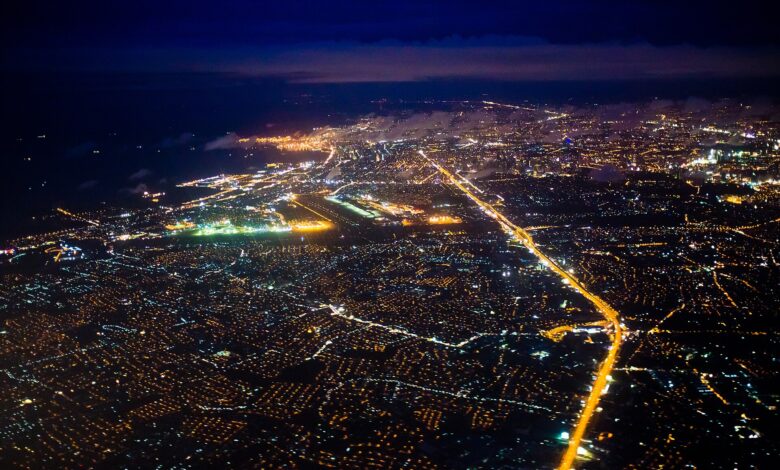
Why More Filipinos Are Moving South of Metro Manila
For decades, every elder in the province told children the same thing. If you want a good job, a decent school, or access to real opportunity, move closer to the center. Generations followed that advice, and Metro Manila grew accordingly.
Daily Life in Metro Manila Looks Different Today
The National Capital Region has more than 14 million residents across 636 square kilometers, according to the 2024 Census of Population. The actual daytime population climbs even higher once provincial commuters are included. Roads designed for a smaller urban population now carry volumes they were never meant to handle, while public transit has not expanded at the pace demand requires.
A flat in Pasay may appear minutes from Makati on a map, but can take an hour to reach on a typical weekday morning. Physical proximity no longer guarantees accessibility. The gap between distance and travel time continues to widen, reshaping how people experience the city.
Remote Work Loosened the Capital’s Grip
During the pandemic in 2020, companies across BPO, technology, finance, and marketing adopted hybrid or fully remote work arrangements. Many of these setups remained even after restrictions were lifted. For a large portion of Metro Manila’s workforce, the daily commute to Bonifacio Global City or Ortigas shifted from routine to optional.
When office attendance is no longer a daily requirement, the logic behind living near business districts shifts. Households that once absorbed long commutes as the price of a central address now have room to ask different questions. How much space do we actually need? What does the same budget get us somewhere else? Others considered moving back home, to their provinces. For many, the direction is pointing south.
Why the South Is Becoming a Preferred Choice
Cavite and Laguna have long served as Metro Manila’s release valve. That role still exists, but a new pattern is emerging. People are no longer simply pushed out by necessity. Many are actively choosing to move.
The Cavite Laguna Expressway, which opened initial segments in 2021, reduced travel time between Laguna and southern Metro Manila. Together with the South Luzon Expressway network and ongoing improvements, the corridor is now significantly more accessible than it was a decade ago. Housing options in these areas also offer more space at a lower cost, making them increasingly attractive to younger buyers compared to options within Metro Manila.
Even so, most households that relocate maintain ties to the capital. They still return for specialized medical care, government transactions, or work that cannot be done remotely. The shift reflects a change in where people live, not a complete separation from the city.
Mixed-Use Developments Are Rising
One response to this continued reliance has been to reduce the need for travel altogether. Large mixed-use estates are evolving beyond traditional residential subdivisions into more integrated environments.
Villar City, located in the southern corridor, combines residential communities with commercial spaces, schools, and workplaces within a single connected area. The idea is simple. If daily needs can be met within a short distance, the need to travel back to Metro Manila becomes less frequent.
This model reflects a broader shift in urban planning, where accessibility is defined not by distance to the capital but by the availability of essential services within the community itself.
RELATED – Villar City: Metro Manila’s Bold New Megalopolis
Metro Manila continues to hold major functions that are difficult to relocate. National government agencies, courts, major financial institutions, and advanced hospitals remain concentrated there. For individuals who depend on these regularly, proximity to the capital is still necessary.
However, the portion of daily life that requires being in Metro Manila is shrinking for many. As more people move south, the key question is whether these areas will develop their own employment centers and institutions, or remain primarily residential communities connected to the capital.