
When the Ground Moves, Systems Are Revealed: What the Mindanao Earthquake Exposed
The Mindanao earthquake didn’t just shake the ground. It shook classrooms mid-lesson. Offices mid-meeting. Cities mid-routine.
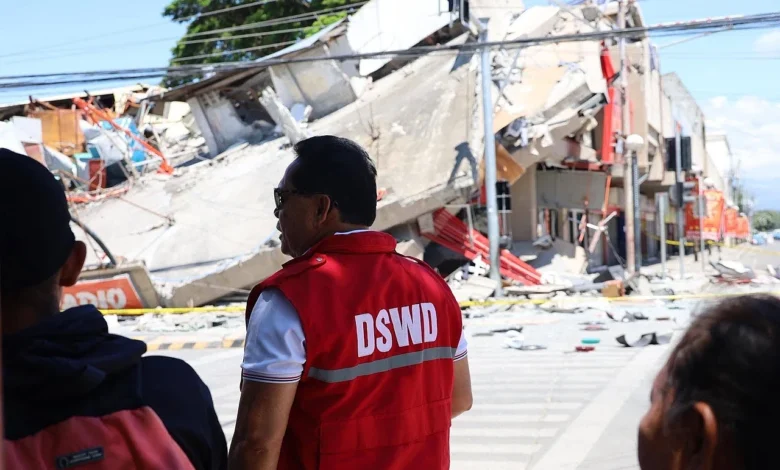
At least 37 people were killed, 479 were injured, and four remain missing after the magnitude 7.8 quake off Sarangani, according to the NDRRMC. More than 19,000 families were affected. Thousands are still in evacuation centers.
But numbers only tell you what happened. The system tells you how it happened.
Mindanao Earthquake Impact (NDRRMC Update)
According to the National Disaster Risk Reduction and Management Council (NDRRMC), the magnitude 7.8 earthquake that struck off the coast of Sarangani resulted in:
- At least 37 confirmed deaths
- 479 injured individuals
- 4 missing persons
- Over 19,000 affected families
- Around 5,000 families displaced in evacuation centers
Regional breakdown of casualties:
- Davao Region: 4 deaths, 23 injured
- SOCCSKSARGEN: 33 deaths, 456 injured, 4 missing
Response efforts included the deployment of around 150 Philippine Coast Guard personnel to General Santos City to assist in rescue operations, including retrieving trapped individuals from collapsed structures and supporting search efforts for the missing.
WE ARE NOT UNPREPARED. WE ARE UNEVENLY PREPARED.
The Philippines knows earthquakes.
We drill it in schools.
>We post reminders.
>We have protocols for it.
But none of that guarantees symmetry. Because preparedness in this country depends on where you stand.
Some places move like the system is already wired. Others move like they’re assembling it mid-crisis.
Same country. Different response speed.
It’s a problem within the systems.
THE RESPONSE CHAIN IS ONLY AS FAST AS ITS SLOWEST LINK
In theory: PHIVOLCS alerts. NDRRMC coordinates. LGUs act. Communities respond.
In reality, the chain moves at different speeds depending on where you are.
Some LGUs suspend classes immediately. Others wait for confirmation. Some mobilize rescue teams fast. Others are constrained by capacity.
READ: Are Megaworld Buildings in BGC Earthquake-Ready?
The system doesn’t fail all at once. It moves unevenly.
And uneven systems feel like delays when lives are on the line.
Beyond the Shake
Earthquakes last seconds. Their consequences last far longer.
After the shaking stops, inspections begin. Repairs are planned. Communities return to buildings they now assess differently. But the deeper question remains: does recovery rebuild the same vulnerabilities, or does it correct them?
Because the real measure of preparedness is not how quickly we return to normal, but whether that “normal” becomes safer.