
The Filipino Odyssey: The Journey of the Balangay
Long before modern ships crossed the oceans, Filipino ancestors were already building boats to travel, trade, and connect communities across the sea. The balangay, a traditional wooden vessel discovered in archaeological sites in Butuan, offers a glimpse into that maritime past.
Centuries later, a group of Filipino adventurers set out to bring this history back to life. Through the Voyage of the Balangay, the team sailed replicas of ancient boats across Philippine waters and beyond, following traditional navigation methods and sharing the story of the country’s seafaring heritage along the way.
The expedition was more than a test of endurance. It was an attempt to reconnect Filipinos with a part of their history that deserves a place in the national story.
The Balangay: A Boat Rooted in Philippine History
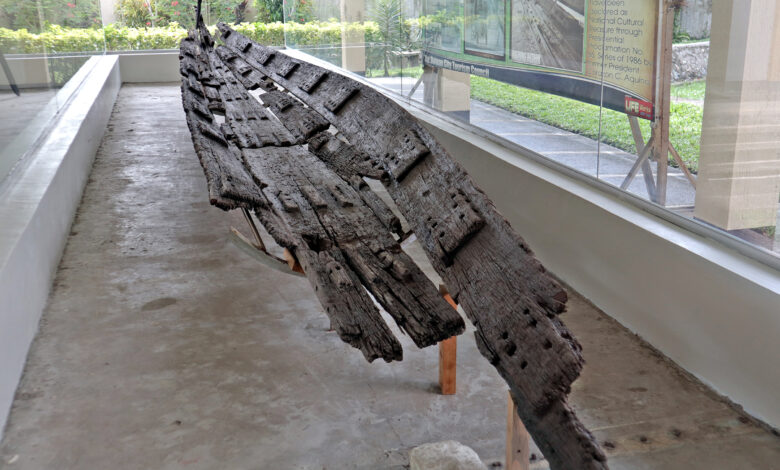
The balangay is a traditional wooden boat associated with early Filipino communities. Archaeological discoveries in Butuan City, Agusan del Norte, helped establish its significance in understanding the country’s maritime past.
In 1976, archaeologists discovered several ancient boat remains in Butuan. Known as the Butuan boats, these vessels were built using wooden planks joined through traditional construction techniques. Samples from excavated boats were carbon-dated to between approximately 320 CE and 1250 CE.
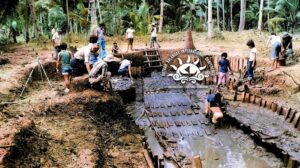
The discoveries offered physical evidence of sophisticated boatbuilding traditions in the archipelago centuries before Spanish colonization. They also helped researchers better understand how early communities developed the skills needed to travel and live in a maritime environment.
For the Voyage of the Balangay team, these discoveries provided the foundation for a much larger undertaking: building boats inspired by the ancient vessels and taking them back to sea.
The Filipino Odyssey Begins
The Voyage of the Balangay was organized by the Kaya ng Pinoy Foundation, the group associated with Filipino expeditions to Mount Everest. Led by Arturo Valdez, the project set out to retrace the seafaring routes of Filipino ancestors using boats modeled after the Butuan discoveries.
The first phase began in 2009 with the launch of Diwata ng Lahi. Other vessels, including Masawa Hong Butuan and Sama Tawi-Tawi, joined the expedition as it expanded.
The project brought together adventurers, maritime personnel, and traditional boatbuilders. Among the latter were Sama craftsmen from Tawi-Tawi, whose boatbuilding knowledge helped make the vessels possible.
Their involvement was essential. Reconstructing an ancient boat required more than a design based on archaeological evidence. It also required practical knowledge of working with wood, assembling a vessel, and understanding how a boat behaves in the water.
The expedition gave these skills a public stage, placing traditional craftsmanship at the center of a modern Filipino undertaking.
Sailing With the Knowledge of Our Ancestors
One of the expedition’s defining challenges was navigating without relying entirely on modern maritime technology. The crew sought to follow traditional methods, using the sun, stars, wind, and observations of the natural environment to guide their journey.
These techniques demanded close attention to changing conditions at sea. Weather, waves, and equipment problems could affect the voyage, and the crew sometimes had to seek shelter to repair damaged components.
In a 2019 account published by the Philippine Graphic, crew member Carina Dayondon recalled an occasion when the team had to take shelter on an island to repair a broken mast.
Such experiences made the voyage a practical encounter with maritime history. The team was not simply displaying a replica of an ancient vessel. It was learning what it took to keep a traditional boat moving across open water.
From Philippine Waters to Southeast Asia
The expedition grew beyond a journey around the Philippines. Over approximately 14 months, the fleet traveled through parts of Southeast Asia, including Brunei, Indonesia, Malaysia, Cambodia, Thailand, and Singapore, according to contemporary reporting.
The route placed the balangay within a wider maritime setting. For generations, communities across Southeast Asia have depended on waterways for movement, exchange, and contact with neighboring societies. The voyage offered a way to explore this regional history through the experience of sailing.
The project also brought its message to communities along the route. During stopovers, members of the team conducted school activities and shared the historical significance of the balangay with students.
READ: FK Reviews “The Odyssey” 2026: A Near-Perfect Retelling That Plays It Too Safe
This educational purpose was central to the expedition. Its organizers wanted Filipinos to recognize the country’s precolonial maritime traditions and the capabilities of the people who developed them.
The journey later inspired another expedition. In 2017, a new group of balangay vessels sailed toward Hong Kong and China as part of efforts to commemorate the historic 1417 visit of Sultan Paduka Batara of Sulu to the Ming imperial court.
Together, these voyages drew attention to the Philippines’ historical connections with the wider region, while bringing traditional boats and seafaring knowledge back into public view.
Keeping the Balangay’s Story Alive
The Filipino Odyssey shows how a historical vessel can bring the country’s maritime heritage to life. The balangay is evidence of ancient boatbuilding, but sailing one also reveals the knowledge, labor, and cooperation required to travel across the sea.
The expedition depended on people with different skills, from adventurers and maritime personnel to traditional boatbuilders. Their collaboration showed why preserving heritage involves more than protecting artifacts. It also means recognizing the communities that carry practical knowledge from one generation to the next.
The journey also offered a different way to approach Philippine history. Rather than viewing the archipelago only through the boundaries that define it today, the voyage highlighted the sea as a space of movement and connection.
The balangay’s story continues through archaeological research, traditional craftsmanship, and efforts to bring maritime history to new audiences. The Filipino Odyssey helped carry that story beyond museums and textbooks, taking it back where it belongs: out on the water.
