Sustainable Ecotourism Built One Wave at a Time in Sorsogon
On the southeastern coast of Southern Luzon, a beachfront camp has grown into something far larger than its founders anticipated. Lola Sayong Eco SurFarm began as a borrowed patch of sand and has since become one of the more compelling examples of what Philippine eco-tourism can look like when it is built from the ground up.
A Borrowed Beach That Became a Community
In February 2014, a young surfer named Noli John Mercader approached the elderly owner of a coastal lot in Gubat, Sorsogon. The woman, known locally as Lola Sayong, agreed to let the group use the space on one condition: they had to keep it clean and prevent coconut theft. What followed was unplanned: more surfers came; locals also joined. A loose collective of wave riders gradually took shape as a formal organization, Gubatnon for Adventourism Inc., which now counts 72 members.
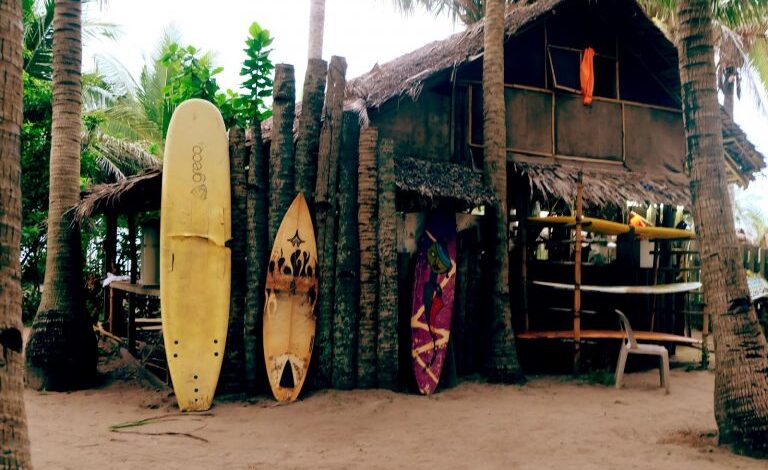
The camp that emerged from that arrangement is deliberately low-intervention. There are no lounge chairs, hammocks hang between coconut palms, showers are fashioned from bamboo, and nipa huts serve as guest accommodations. Meanwhile, single-use plastics, alcohol, loud music, and karaoke are all prohibited on the premises. These rules are not incidental. They reflect a stated philosophy. The camp exists not merely as a lodging option but as a demonstration of sustainable tourism’s viability.
“We want to maintain its natural beauty. It has become part of our advocacy that Lola Sayong is not just a tourist spot, but an example of environmental preservation.” — Noli John Mercader.
Youth Programs and Wildlife Stewardship Beyond the Waves
Surfing at Lola Sayong involves more than riding waves. The camp enforces a No School, No Surf policy that links beach access to school attendance for the young local instructors who work there. These instructors, some still in their teens, earn from lesson fees and tips, with a portion of their income set aside in individual savings accounts. The goal, as Mercader has described it, is financial literacy alongside surf skills.
Conservation work at the camp extends to the sea. The hawksbill sea turtle, known locally as the pawikan, was long hunted for food in Sorsogon. Lola Sayong staff, in coordination with the local government of Gubat, created an incentive program. This offers cash and rice in exchange for baby pawikans brought in by residents or former poachers, rather than those that are harmed. Cultural programming rounds out the experience. Guests are invited to play traditional Filipino games such as Sungka and Tumbang Preso, drawing visitors who return not only for the surf but also for a connection to local life.
How a Pandemic Forced a Reinvention, and Produced a Farm
When COVID-19 halted tourism operations, Lola Sayong lost approximately 90 percent of its income. The team responded by launching a virtual farming initiative. This allowed former guests and outside investors to fund crops, livestock, or poultry managed by local community members. Under this model, 65 percent of returns go to the farmers and surfers who tend the produce, while the remaining 35 percent support camp maintenance. Investors can also opt to convert part of their returns into accommodation credits.
The program formalized the camp’s identity as a circular economy. It is from this pivot that the name SurFarm emerged, and the shift has since influenced how the camp presents itself to new visitors. The on-site restaurant, Granny’s Grub, serves Sorsogon dishes prepared largely from farm-grown ingredients, with its best-known item, Smoked Fish Out of Hell, earning a reputation among guests as a regional staple worth the journey alone.
Eco-Tourism in the Philippines Is Broader Than One Beach
Across the Philippines, communities and operators have been quietly building eco-tourism models that go beyond the conventional beach resort formula, each one shaped by the specific landscape, culture, and needs of the place it calls home. The country’s 7,641 islands offer an extraordinary range of ecosystems, and the eco-tourism operations emerging from them reflect that diversity.
The Farm at San Benito in Batangas draws wellness travelers to an organic agricultural setting where rest and sustainability are built into the same experience. Bohol Bee Farm has built a farm-to-table model around organic gardening and beachfront accommodation, turning everyday agricultural practice into something guests can see, taste, and learn from. Kookoo’s Nest in Palawan offers jungle lodging with direct access to indigenous communities, making cultural immersion as central to the stay as the surrounding wilderness.
What these places share is not a single formula but a common instinct. The natural and cultural environment is the product. Protecting it is not a constraint on tourism but the foundation of it.
RELATED — Backpacking Bicol: Beyond the Volcano
Lola Sayong Eco SurFarm did not begin with a blueprint or a budget. It began with a borrowed lot, a handshake, and a decision to keep the place clean.
Sustainable ecotourism can get started without a resort developer or government program. It requires people who see value in what surrounds them and choose to protect it. Every community has a starting point. The wave at Lola Sayong started with a handful of surfers and a patch of sand. The next one can start with you.