Sara Duterte 2028 Presidential Bid Woke the Public
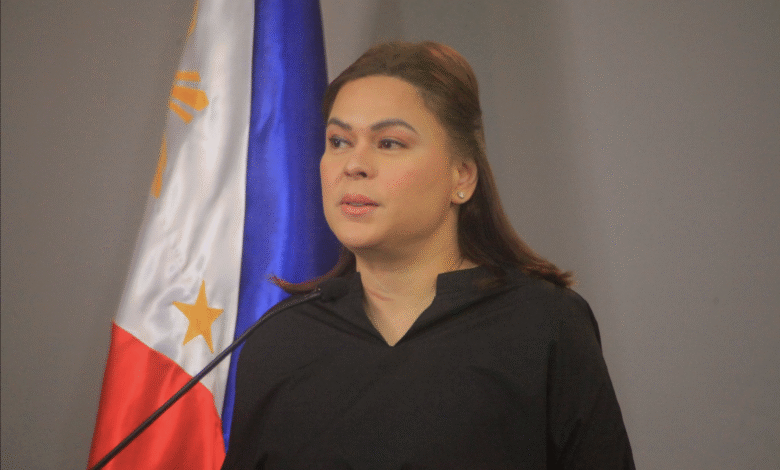
Vice President Sara Duterte has formally declared her candidacy for the 2028 presidential elections, bringing the Duterte name back to the forefront of a deeply polarized political landscape. Her announcement has ignited nationwide debate over her prospects and the potential return of Duterte-era leadership.
A Divided Public
Reactions to Sara Duterte’s announcement reflect a wide spectrum of public sentiment. Some political allies and supporters greeted her bid positively, with members of PDP‑Laban declaring their full backing and describing her candidacy as a response to perceived shortcomings in the current administration. Sen. Imee Marcos said Duterte could “provide direction” and address national problems, framing her bid as a contrast to the status quo.
In contrast, several civil society groups and opposition figures criticized the timing and motive of her bid. Organizations such as Bagong Alyansang Makabayan (BAYAN) described the announcement as a “calculated distraction,” arguing it shifts focus from her ongoing legal controversies, including impeachment complaints and allegations of misuse of confidential funds. University and youth group leaders said the campaign launch raised questions about accountability and political dynasties.
Polls and public surveys show mixed indicators of Duterte’s public standing. Some surveys suggest she retains relatively high satisfaction and trust ratings among certain demographics, particularly younger voters. The national government has remained largely silent. President Ferdinand Marcos Jr. gave a brief “Good luck,” a response political analysts described as noncommittal and indicative of broader political tensions.
What Did the Duterte Administration Deliver?
While the presidency of Rodrigo Duterte faced sustained criticism over human rights and governance issues, his administration implemented major fiscal, infrastructure, and social reforms that reshaped government services and revenue collection.
Through the Tax Reform for Acceleration and Inclusion (TRAIN) Law, the government lowered personal income taxes for millions of Filipinos while raising excise taxes on fuel, tobacco, and sugary drinks, expanding fiscal space for social programs and infrastructure. The Bureau of Internal Revenue also pursued unpaid taxes from large corporations and wealthy individuals, including a landmark 2017 settlement with Mighty Corporation, which paid over ₱30 billion in taxes and penalties.
Infrastructure development remained a cornerstone of the administration through the Build! Build! Build! program. Then-Secretary Mark Villar led the Department of Public Works and Highways from 2016 until his resignation in October 2021 to run for the Senate. During his tenure, the government completed, expanded, or rehabilitated approximately 29,000 kilometers of roads, 5,950 bridges, 11,340 flood control projects, and 150,149 classrooms nationwide.
The administration also reformed public services and social programs. It extended passport validity from five to ten years, allowed long-term driver’s license renewal, institutionalized free tuition in state universities and colleges, implemented the Universal Health Care Act, opened Malasakit Centers, and launched the Philippine Identification System (PhilSys). It also oversaw the passage of the Bangsamoro Organic Law, creating the Bangsamoro Autonomous Region in Muslim Mindanao to advance long-term peace and regional self-governance.
Together, these initiatives form a substantial part of the Duterte governance record. Then again, to many, the bad outweighs the good.
Challenges Facing Sara Duterte
Vice President Sara Duterte enters the 2028 race while facing ongoing impeachment complaints and scrutiny over confidential fund expenditures. While none of the complaints have advanced to trial, the issue has remained part of the broader political discourse surrounding her leadership.
Her candidacy also emerges within a complex political environment that includes shifting alliances and evolving public expectations under President Ferdinand Marcos Jr.. At the same time, proceedings involving former president Rodrigo Duterte at the International Criminal Court in The Hague continue to shape national and international attention on the Duterte name.
These overlapping legal, political, and institutional pressures may influence both the tone and trajectory of her campaign.
READ – The Marcos Game Returns: Musical Chairs in Today’s Cabinet
What Lies Ahead
In the Philippines, children of former presidents have frequently returned to national office, regardless of how their parents’ administrations were judged. The election of Ferdinand Marcos Jr. is the most recent example of this enduring pattern, illustrating how political lineage continues to shape electoral dynamics.
Vice President Sara Duterte now joins that landscape. Her candidacy will be assessed not only on her own record, but also on how voters view the broader Duterte legacy.