
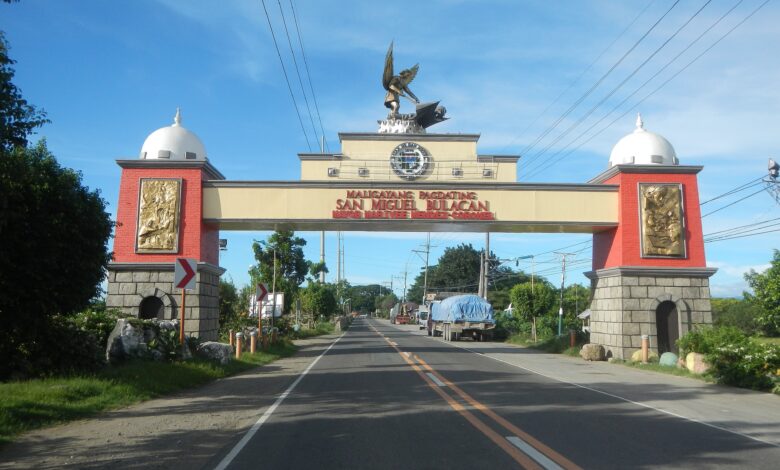
San Miguel Bulacan Is the Heritage Town You’ve Been Sleeping On
76 kilometers from Manila lies a town full of heritage houses, and the birthplace of pastillas de leche. San Miguel, Bulacan is worth the trip
Seventy-six kilometers from Manila, past the sprawl of Bulacan’s lowland towns and into the quieter stretch where the province feels like it’s keeping secrets, sits San Miguel. It doesn’t make the usual lists. For example, it doesn’t have a famous festival that brings crowds. Nor does it have a viral waterfall with a queue. What it has is something slower and more layered — centuries of history still standing in the streets. Religious heirlooms kept inside family homes. Additionally, a local heritage group has made it their mission to make sure none of it disappears quietly.
Their name is Pamana de Mayumo. And if you find them, they will change the way you think about Bulacan.
A Town That Goes By Two Names
San Miguel’s full name is San Miguel de Mayumo — and that second word carries a lot of history. Mayumo is a Kapampangan term meaning sweet. And it tells you something important: this town wasn’t always Bulacan. San Miguel was originally part of Pampanga. It was ceded to Bulacan in 1848. The name stuck, and so did the culinary legacy.
The municipality was officially established in 1763; founded by Carlos Agustin Maniquiz and Miguel Pineda — the town’s first gobernadorcillo — who named it after both the patron saint and the generosity of a man named Mariano Puno. At its height, San Miguel was the largest municipality of Bulacan. Today, it sits quietly at the boundary of Bulacan, Pampanga, and Nueva Ecija. The Sierra Madre mountains border its eastern edge.
It’s a town that has seen a lot. And most of it is still visible, if you know where to look.
The Church That Stands Alone
Every heritage town in the Philippines has its church. San Miguel’s is worth a longer stop than most.
The Diocesan Shrine and Parish of San Miguel Arcangel is the spiritual and historical center of the town. It sits along De Leon Street in Barangay Poblacion. Built in Baroque design under the supervision of Padre Juan Manuel Tombo beginning in 1848 and completed in 1869 under Padre Francisco Arriola, it carries the scars and the stories of every major event that swept through this part of Luzon. Spanish colonists held out inside its walls against Filipino rebels until they surrendered in 1898. The church was severely damaged during World War II and rebuilt afterward.
What makes it architecturally singular in the province is that it is the only church in Bulacan with its belfry attached directly above the pediment. There’s a stone statue of Saint Michael slaying the serpent. Walk inside, and the walls carry another kind of history — tombstones of prominent residents embedded in the church walls, including Dr. Maximo Viola, a native of San Miguel, close friend of Jose Rizal, and the man who financed the publication of Noli Me Tangere. That detail alone is worth the trip.
The Poons of San Miguel
Here is where San Miguel gets unusual, even by Philippine heritage standards.
Members of Pamana de Mayumo will introduce you to the concept of poons — life-sized religious statues, some centuries old, kept not in churches but inside the homes of prominent local families. These aren’t decorative pieces. Instead, they are heirlooms, passed down through generations. Each one has a history and a story that the families still carry. Some of the apostle statues are so lifelike that encountering one inside a private home — in a sala, in a corridor — is a genuinely startling experience.
This tradition of family-owned religious images is rare and deeply specific to San Miguel’s cultural heritage. It’s the kind of thing you won’t read about in a tourism brochure. This is because it exists outside of official tourism entirely. You encounter it through Pamana de Mayumo. In addition, you find it through the families who open their doors and through the slow work of a heritage community keeping its own memory alive.
The Ancestral Houses of Rizal Street
From the church, Pamana de Mayumo will take you to Rizal Street, where several of San Miguel’s most significant ancestral houses still stand. These are not reconstructions or restorations for public display. They are lived-in, family-owned structures that happen to be over a century old. The houses have capiz shell windows, thick adobe walls, and the particular stillness of rooms that have absorbed generations of family life.
One of the most remarkable stops is the Sempio Mansion, also known as the Damaso Sempio House — a structure that has become so associated with San Miguel’s heritage identity that a version of it was recreated at Las Casas Filipinas de Acuzar in Bataan. If you’ve visited Las Casas and marveled at Casa San Miguel, you’ve seen where it came from. The original is here.
Biak-na-Bato: Where the Revolution Hid
Heritage in San Miguel isn’t only about colonial-era houses and Spanish baroque churches. The town also holds one of the most historically significant natural sites.
Biak-na-Bato National Park, declared a protected area in 1937, covers 2,117 hectares across the Sierra Madre foothills bordering San Miguel, Doña Remedios Trinidad, and San Ildefonso. It is the site of the Biak-na-Bato Republic — the short-lived revolutionary government established by Emilio Aguinaldo in 1897 during the Philippine Revolution against Spain. The caves of Biak-na-Bato served as the revolution’s leadership during that period.
Today, the park offers caves, rivers, forested highlands, and a terrain that makes Bulacan feel nothing like the flat province most people assume. For those who want more than church tours, Biak-na-Bato is the natural second act.
READ: You Can Own a Japanese Castle in Hokkaido for Just ₱4M
Pastillas and Buro: The Flavors of San Miguel
Mayumo means sweet — and San Miguel takes that seriously.
San Miguel is celebrated as the birthplace of pastillas de leche, the soft milk candy wrapped in decorated paper that has become one of the Philippines’ most iconic pasalubong. The ones made here are different from what you find in souvenir shops elsewhere. They are richer, less processed, and made from the fresh carabao milk that the region has always been known for.
San Miguel is also known for buro — pickled fermented rice, often served with grilled fish, a Kapampangan staple the town carried with it when the provincial boundary shifted. San Miguel food is a quiet argument. In fact, it shows that culinary heritage and political geography are inseparable.
Cultural heritage groups like Pamana de Mayumo operate without the resources of government tourism offices and without the visibility of viral destinations. They preserve the storytelling because they believe the town’s history is worth carrying forward. And in San Miguel’s case, they are right.
To experience this, contact Manilakad or Pamana de Mayumo directly to arrange a guided tour.
Getting There
San Miguel, Bulacan is approximately 76 kilometers from Manila. Buses bound for San Miguel depart from the Cubao terminal in Quezon City. Travel time is roughly 2-3 hours depending on traffic. You can take a tricycle to the town center from the bus drop-off point.
San Miguel, Bulacan, is worth the day trip.