
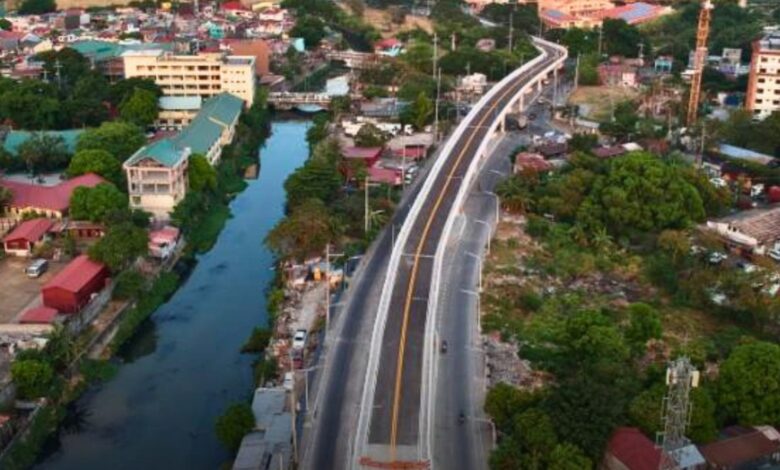
Lawmaker Asks DPWH to Tear Down Part of C-5 Flyover
Two years after it opened to motorists in April 2024, the C5 Extension Quirino Flyover in Las Piñas has become part of the daily route for drivers moving through one of southern Metro Manila’s busiest corridors.
Is It Necessary to Remove It?
The controversy centers on the LRT-1 Cavite Extension, particularly its remaining sections serving Las Piñas and Zapote.
Rep. Mark Anthony Santos has argued that part of the C5 Quirino Flyover obstructs the railway project’s planned right-of-way and should be removed to allow the extension to move forward.
Santos filed House Resolution No. 19 calling for a congressional inquiry into the issue. Reports on the resolution said he urged officials to study the removal of the obstructing portion of the flyover instead of redesigning the railway alignment around it.
What Is at Stake for Commuters
This is not simply a choice between building rail and keeping a road project. It is a question of how the government should resolve a planning conflict involving two major public infrastructure projects.
According to reports citing Santos, redesigning the LRT-1 stations and alignment around the flyover could require about 1 billion pesos in additional cost. The flyover itself has been reported to cost 300.39 million pesos. Those figures should be reviewed carefully by the Department of Public Works and Highways, the Department of Transportation and Congress before any final decision is made.
The debate should also recognize what the flyover already represents to commuters. It is a completed public work that now helps move traffic through a difficult corridor. For many motorists, projects like this are a reminder of the infrastructure push associated with Sen. Mark Villar’s years in public works, when road connectivity and congestion relief were placed at the center of government planning.
Removing part of the flyover may clear space for the LRT-1 Cavite Extension, but it could also disrupt motorists who already use the structure. Keeping it in place may preserve an existing road benefit, but it could also require changes to the railway design. Either path carries public cost, construction risk and commuter impact.
READ — The Benefits of Farm-to-Market Roads in PH
A More Sensible Path Forward
Before any demolition takes place, the public deserves a clear technical explanation from the agencies involved. Officials should disclose whether the flyover directly blocks the approved LRT-1 alignment, how much redesign would actually cost, how long each option would take and what traffic disruptions commuters should expect.
The goal should be to complete the LRT-1 Cavite Extension without creating another avoidable infrastructure problem. Commuters need both better roads and better rail. The decision should be based on verified engineering, transparent costing and the least disruptive path toward completing the project.