Is People Power Dead? 40 Years Later, Now What?
For many Filipinos today, EDSA feels less like a symbol of democracy and more like a traffic update. But its legacy of people power remains significant in our history.
“Ma-traffic diyan, may rally ba?”
“People Power? Holiday lang ‘yan.”
Forty years after the historic uprising along Epifanio de los Santos Avenue, a hard question lingers: Is People Power dead?
Or are we just looking at it the wrong way?
From Revolution to Rush Hour
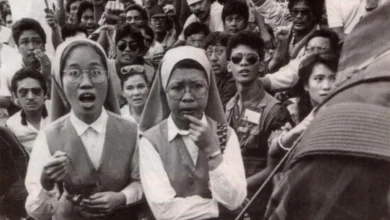
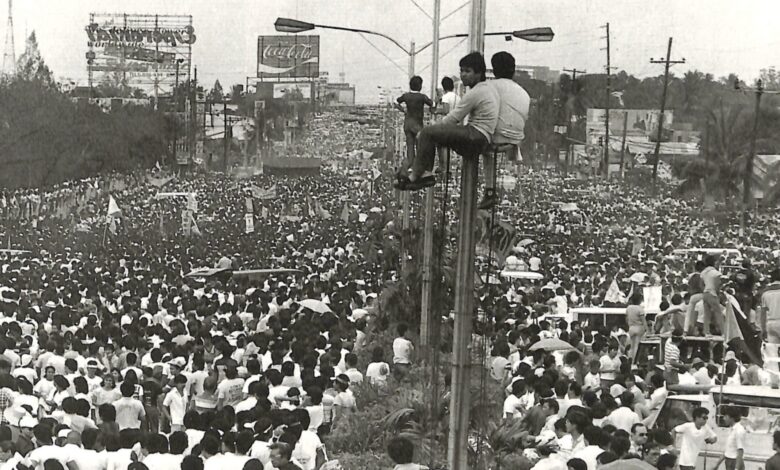
In 1986, millions gathered along EDSA to oust dictator Ferdinand Marcos. The world watched as civilians, nuns, soldiers, and ordinary workers stood together in what would later be called the People Power Revolution.
It was peaceful. It was bold. It changed history.
Today, EDSA is better known for gridlock than grit. The same highway that once symbolized unity now represents daily frustration. Jeepneys inch forward. MRT lines stretch long. Billboards tower over the shrine.
The contrast is painful.
But maybe that’s the point.
Democracy was never meant to be a one-time event. It was meant to be a continuous act.
The “Rally Fatigue” Era
Recent rallies rarely match the scale of 1986. Crowds are smaller. Reactions are louder online than on the streets. Hashtags trend. TikToks circulate. Memes spread faster than manifestos.
Some say protest culture has weakened. Others argue it has simply evolved.
Instead of occupying highways, people now occupy timelines.
Instead of transistor radios, there are livestreams.
Instead of yellow ribbons, there are profile frames.
The energy is different. But the anger, hope, and clamor for accountability remain.
The question is not whether rallies are relevant. The question is whether Filipinos still believe collective action works.
Is It Dead or Just Dormant?
Critics argue that People Power failed to solve systemic problems: corruption, political dynasties, and poverty. They point out that the son of the ousted dictator, Ferdinand Marcos Jr., now sits in Malacañang.
To some, that feels like history reversing itself.
Yet history rarely moves in straight lines.
People Power was never a magic cure. It was a reset button. What came after depended on institutions, leaders, and citizens. Democracy demands maintenance. When participation weakens, power concentrates again.
So maybe People Power isn’t dead.
Maybe it’s waiting.
Waiting for an issue big enough.
Waiting for outrage strong enough.
Waiting for unity clear enough.
Traffic Lang Ba Ganap sa EDSA?
If EDSA is now just traffic, that says less about the revolution and more about our collective memory.
Symbols fade when stories are no longer retold. Anniversaries feel ceremonial when younger generations don’t feel the urgency.
But look closely.
Every time students mobilize.
Every time workers strike.
Every time citizens fact-check misinformation.
That, too, is People Power.
It doesn’t always look dramatic. Sometimes it looks like civic engagement. Sometimes it looks like voting. Sometimes it looks like refusing to forget.
READ: 84% of Filipinos find democracy in the country satisfactory – SWS
Forty Years Later, after the first People Power, Now What?
Maybe the real question isn’t whether People Power is dead.
Maybe it’s this: What kind of People Power do we need now?
Not just crowds on highways—but critical thinkers.
Not just slogans—but sustained accountability.
Not just anniversaries—but active citizenship.
EDSA may be congested.
But democracy is only as stalled as its people allow it to be.
And if history has taught us anything, it’s that Filipinos move—slowly, quietly, then all at once.
The road is still there.
The question is whether we’re willing to walk it again.