
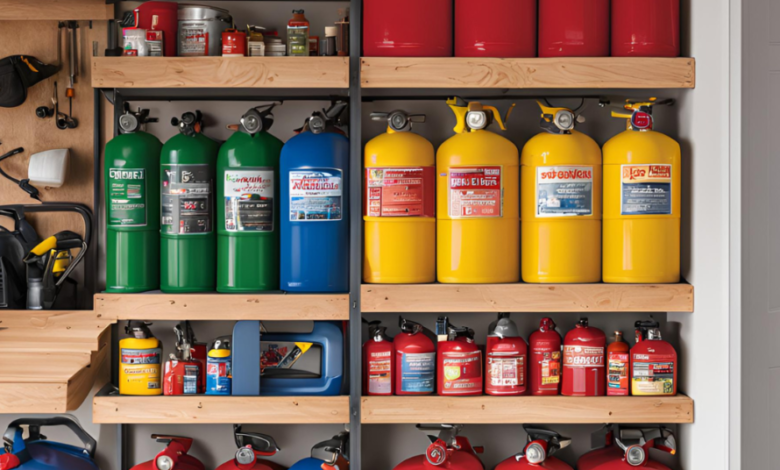
How to Store Gasoline Safely at Home
Gasoline and diesel power vehicles, generators, and other equipment, but improper storage can cause leaks, contamination, and fire hazards. Before keeping extra fuel, make sure you have the right container and a safe place to store it.
What containers can I use?
Use approved fuel containers that meet applicable safety standards. The Department of Energy (DOE) identifies compliant portable containers as suitable for fuel storage.
Avoid soda bottles, ordinary plastic jugs, and other containers not designed for fuel. Gasoline and diesel can damage unsuitable materials, increasing the risk of leaks and spills.
How do I store fuel safely?
Follow these precautions when storing gasoline or diesel:
- Keep containers tightly sealed and check for leaks.
- Store fuel in a cool, shaded, well-ventilated location away from living spaces.
- Keep containers away from heat, sparks, open flames, and running engines.
- Never smoke near stored fuel.
- Keep gasoline and diesel in separate, clearly labeled containers.
- Secure containers during transport to prevent spills.
- Keep fuel away from children and animals.
- Avoid storing large quantities at home.
- Clean up spills only when it is safe to do so, following appropriate safety procedures.
- Inspect stored fuel regularly for contamination and container damage.
Always follow local fire-safety regulations and the fuel container manufacturer’s instructions.
How long does stored fuel last?
Gasoline can deteriorate over time, particularly when exposed to air and unsuitable temperatures. Diesel is less prone to evaporation but can develop moisture contamination, oxidation, and deposits.
Storage life varies depending on fuel quality, temperature, and container conditions. Follow the supplier’s recommendations and the equipment manufacturer’s instructions before using stored fuel.
READ: BSP sees wider current account deficit on higher fuel prices
Is it safe to store fuel at home?
Fuel storage carries fire and health risks, especially in enclosed or poorly ventilated spaces. Store only the amount you need for your intended use, and check local regulations before storing fuel at home.
When in doubt, consult the Department of Energy or the Bureau of Fire Protection for guidance on safe fuel handling and storage.
