Bakit Parang Hindi Na Ganun Ka-Pasko sa Pilipinas?
The Filipino Christmas spirit has always been associated with long celebrations, colorful decorations, and festive neighborhoods. Remember when you could tell Christmas was coming without even looking at the calendar?
By September, may mga Christmas lights nang nakasabit sa kapitbahay. May parol sa labas ng bahay. Families would spend weekends putting up their Christmas trees, untangling old lights, and bringing out boxes of decorations they had kept since the previous year.
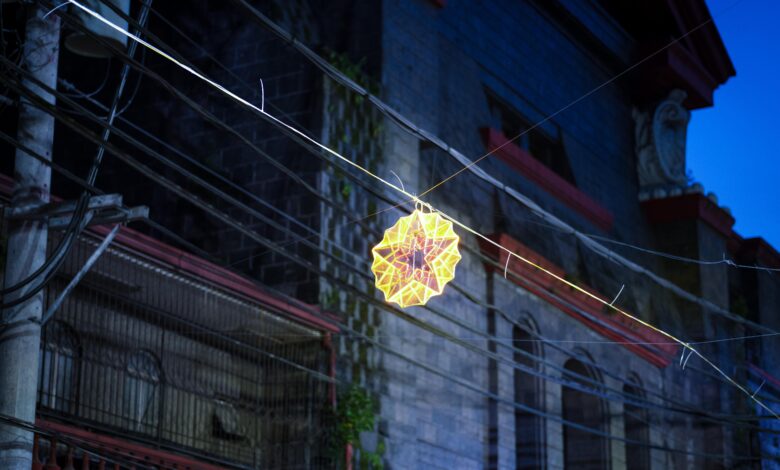
By December, entire streets seemed to come alive. May mga ilaw, belen, Christmas lanterns, and elaborate displays that turned ordinary neighborhoods into little Christmas attractions. Even a simple walk around the subdivision could feel like part of the celebration.
But lately, some people have been asking a familiar question: Bakit parang hindi na ganun ka-Pasko?
Maybe it’s nostalgia. Maybe the decorations are still there, just in different places. Or perhaps the way Filipinos prepare for and celebrate Christmas is changing.
There is no nationwide data confirming that fewer Filipino households are decorating for Christmas. Still, the feeling opens up a bigger conversation about money, changing priorities, and how the Filipino Christmas spirit is evolving across generations.
Why Does Pasko Feel Different Today?
Christmas Is Getting More Expensive
One practical reason is the cost of celebrating.
Christmas decorations may seem like small purchases, but putting up a display comes with expenses. There are lights, extension cords, ornaments, trees, outdoor fixtures, and the electricity needed to keep everything running. Add Christmas parties, gifts, Noche Buena, and family gatherings, and the holiday budget can quickly grow.
For households already managing everyday expenses, decorations may be among the first things to cut back on.
The latest inflation figures offer some context. According to the Philippine Statistics Authority (PSA), headline inflation reached 7.8% in October 2026, up from 7.2% in September. Housing, water, electricity, gas, and other fuels recorded a 9.3% annual increase, while transport prices rose by 20.1%.
These figures do not tell us how much families are spending on Christmas decorations. However, they show the kind of price pressures households are dealing with as the holiday season approaches.
When groceries, transportation, utilities, and other essentials take up more of the budget, spending on decorations can become harder to justify. A family might still want a fully decorated home, but choose to reuse last year’s lights or put up a smaller Christmas tree instead.
For some, celebrating Christmas now means deciding which traditions they can afford to keep.
Another Year, Another Reason to Feel Tired
There’s also the emotional side of the equation.
The Philippines has spent another year dealing with difficult national conversations, political controversies, disasters, and everyday problems that continue to affect ordinary households. These issues do not automatically take away the Christmas spirit, but they can influence how people feel as the year comes to an end.
It’s difficult to feel festive when daily life already feels exhausting.
Preparing for Christmas takes time and energy. Someone has to bring out the decorations, clean the house, organize gatherings, shop for gifts, and plan meals. These activities can be enjoyable, but they also require effort.
When people are already stretched thin by work, financial concerns, family responsibilities, or uncertainty about the future, they may have less energy for elaborate celebrations.
The result might be a quieter Christmas. Not necessarily a sad one, but one that asks less from everyone.
Are Younger Filipinos Celebrating Christmas Differently?
Another possibility is that Christmas traditions are changing with each generation.
For many older Filipinos, decorating the house, putting up a Christmas tree, hanging lights, and preparing for family gatherings were familiar parts of growing up. These traditions were often passed down through families and repeated every year.
Younger Filipinos may have a different set of priorities and ways of celebrating.
Some may prefer spending on experiences, travel, or time with friends rather than buying decorations. Others may be more comfortable with simpler home setups or smaller gatherings. For younger adults living independently, decorating an entire home may not feel as important as it did in their childhood households.
Social media may also influence what Christmas looks like. Instead of elaborate outdoor displays, some people may focus on curated spaces, personal celebrations, or experiences worth sharing online.
But this does not mean younger Filipinos care less about Christmas. They may simply express their excitement differently.
And it’s worth remembering that younger generations are not the only ones changing their habits. Parents and older family members may also be choosing simpler celebrations because of their budgets, living arrangements, or changing circumstances.
The question may be less about whether the younger generation has lost the Christmas spirit and more about which family traditions they want to carry forward.
Maybe We’re Celebrating Christmas in Smaller Ways
Not every change has to mean something has been lost.
Some families may have stopped putting up elaborate decorations but still make time for noche buena. Others may have smaller gatherings, exchange fewer gifts, or reuse the same decorations every year. Some may find more meaning in attending Simbang Gabi, visiting relatives, or simply spending a day together without the pressure of preparing a big celebration.
There is also a difference between how Christmas looks from the outside and how people experience it at home.
A street with fewer lights does not necessarily mean its residents are less excited about the season. A modest Christmas tree does not make a family’s celebration less meaningful.
In fact, a Social Weather Stations survey conducted in November 2025 found that 68% of adult Filipinos expected to have a happy Christmas. While that was lower than the 73% recorded in 2022 and 2023, it was higher than the 65% recorded in 2024.
The survey does not measure decorations or prove that Christmas traditions are disappearing. However, it offers a useful reminder: the way people celebrate and how they feel about Christmas are two different things.
Is the Filipino Christmas Spirit Disappearing?
Maybe not. Maybe it’s changing.
The familiar sights of Filipino Christmas may look different in some neighborhoods. Some families have less money to spend. Others have less time and energy. Younger generations may be creating traditions that look nothing like the ones their parents grew up with.
And for some, the season may simply feel quieter after another difficult year.
But the Filipino Christmas spirit has never been defined by decorations alone. The lights, parols, trees, and elaborate displays are part of the experience, but so are the people who gather around the table, the relatives who come home, and the small traditions families choose to keep.
Perhaps the better question is not whether Filipinos have stopped celebrating Christmas the way they used to.
It’s whether we’re making room for a new version of it.
Maybe the lights haven’t disappeared entirely. Maybe some families are just finding different ways to make the season feel like Christmas.