Meet the Gen Z ‘Cleanfluencer’ Cleaning Up the Philippines
Gabriel Luna Patino has been picking up other people’s trash since high school; not for the followers, but because someone has to.
Nobody asked Gabriel Luna Patino to clean up after them. He just started doing it anyway. For Patino, the cleanfluencer label fits loosely, since he never set out to build an audience.
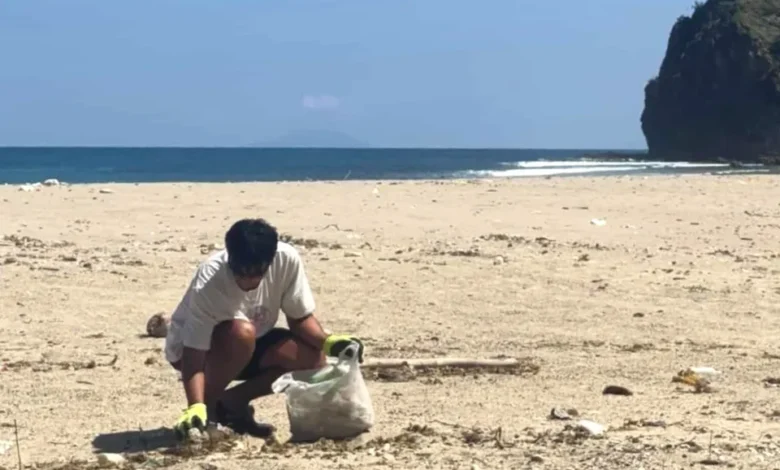
Patino works a regular embassy job from 8 to 5, yet he spends a good chunk of his free time picking up other people’s trash on beaches, mountain trails, city streets, and provincial highways across the Philippines. He posts the clean-ups on Instagram and TikTok not because the following is massive, but because visible proof that someone is actually doing something might inspire someone else to do the same.
He’s been doing this since high school
Patino only started posting his clean-ups in 2025, but the work itself goes back nearly a decade. It started around 2016 or 2017, when he was still in high school and noticed that the vacation spots he loved were slowly getting worse. He started small, with no gear, no plan, just a plastic bag and two hands.
A lot has changed since then. These days, he shows up with a reflective safety vest, high-visibility gloves, closed shoes, walis tingting, dustpan, headlamp, and tongs. He does it at least three times a month. During provincial trips, every two weeks in the city, or whenever he notices trash piling up. Each session runs two to three hours, and he counts it as his workout for the day.
“If at this moment I feel that my workout of that day should be cleaning, that’s what I do,” he says.
He grew up in a family that treated environmental awareness as normal. His mother runs a local tourism business. His father works in forestry, conducting environmental research and programs for indigenous communities. Patino credits them for getting him outdoors early. But his lolo pushed him to think bigger — not just to clean, but to consider what collective action could look like.
Patino’s version of that? Make the work visible. Let other people see it. Skip the formal organization and be the example.
Across his clean-ups, Patino has collected discarded school bags and shoes in Davao del Sur, single-use sachets in the mountains of Zambales, and fast food wrappers along Taguig’s avenues. The mountains are the hardest; you carry everything back down through technical terrain while hauling your own gear.
But the trash itself is almost secondary to what it reveals. One commenter asked where to put the trash they collect because their province has no pickup service. Near Davao, Patino cleaned beside a stilt community whose only option was the water.
“Lahat ng uri ng basura nasa dagat din. Not because they’re there, but because there’s nowhere else to throw it,” he says.
His clean-ups keep revealing a sad truth:
“‘Yung mga basura na nasa dagat, nasa beach, when you observe what trash they are, they aren’t tourist trash. They’re local trash,” says Patino. People believe the rain will wash it all away. “Nagulat din ako to find out that that’s a common thinking. So, of course, education is also part of this.”
The case for maintenance
Patino’s sharpest observation isn’t solely about trash; it’s about how Filipinos think about upkeep.
“We always like to rehabilitate, rehabilitate. Whereas, hindi naman talaga kailangan i-rehabilitate kung namaintain lang natin,” he says. “Our government is very good at new projects, but we’re not good at maintaining the ones we have already.”
He has gotten sideways glances and discouraging comments from people who remind him the trash will just come back. His answer: “Ganun din naman sa labahin, o hugas pinggan. Mamaya meron na ule.”
Maintenance is the point. Not a one-time clean-up event with a hashtag and a photo op; we need the quiet, recurring, unglamorous habit of keeping things intact.
Patino is not trying to save the country by himself. He knows the problem is bigger than any one person with a walis. But he shows up anyway, documents it, and puts it on the internet for anyone paying attention.
You don’t need a title, a volunteer org, or a cape. Sometimes, you just need a trash bag and a reason to care.
He’s been carrying both since he was 16.