

El Niño Has Already Cost Farmers P8.57 Billion. Should the Whole Country Be Under a State of Calamity?
A senator says yes, and the numbers on aid show why.
Farmers in 14 regions are already counting their losses from the dry spell.
On Wednesday, Oct. 21, Sen. Francis “Kiko” Pangilinan urged the executive branch to consider declaring a national state of calamity because of El Niño.
“The executive department should seriously consider a state of calamity declaration so that we can better address the challenge of the Super El Niño,” he said during a Senate finance committee hearing on the Department of Agriculture’s proposed 2027 budget.
How Bad Is It?
Citing DA data, Pangilinan said farm losses from the drought had reached P6.87 billion as of Sept. 26. He said that figure did not yet reflect the full impact of El Niño.
The DA’s own count has since climbed. On the day of the hearing, it put damage and losses at P8.57 billion, hitting 288,058 farmers and 291,154 hectares in 14 regions. Corn took the biggest hit at P5 billion, followed by rice at P2.95 billion. The DA says the numbers still need validation.
He also pointed to a DA projection that palay production could drop by 700,000 metric tons. That, he said, equals the yearly rice needs of about 3.6 million Filipinos.
Local governments have declared their own states of calamity in 106 cities and towns across five regions: 66 in Cagayan Valley, 23 in Caraga, 12 in Bicol, four in Calabarzon and one in Soccsksargen, according to the national disaster council’s count as of Oct. 5.
Is Help Reaching Farmers?
Not fast enough, according to Pangilinan. He said only 2.53 million of the 11.2 million targeted beneficiaries had received aid as of Oct. 6. He called for faster delivery to farming communities dealing with water shortages and damaged crops.
The Office of Civil Defense says P7.864 billion in the national disaster fund is available for the El Niño response. The DA says it has already given out P11.34 billion in help, mostly seeds, fertilizer and other farm inputs. It also presented a P61.99-billion El Niño action plan, with P6.2 billion already released under its UPLIFT program.
Will It Get Worse?
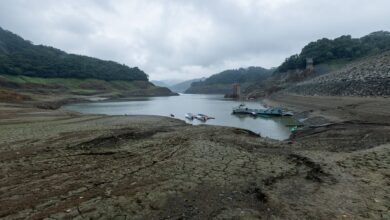
PAGASA has warned that El Niño could become a very strong episode before the end of 2026 and continue into the first half of 2027. That means more risk of drought and water shortages in vulnerable areas.
What Does the Budget Have to Do With It?
Pangilinan wants water and irrigation at the heart of the 2027 farm budget. “The center of the 2027 DA budget should be water and irrigation,” he said.
The DA’s proposed 2027 budget is about P198.4 billion. Proposed cuts to the DA and the National Irrigation Administration also came up at the hearing.
ALSO READ: Buckets, Dams and Cloud Seeding: How Our Neighboring Countries Are Preparing for El Niño
Agriculture Secretary Francisco Tiu Laurel Jr. told senators that farmers and fisherfolk face a “perfect storm” of climate threats, higher production costs, and global shocks. He said a worst-case scenario could affect as many as 4.6 million of the 10.4 million Filipinos who work in agriculture.
What Would a National Declaration Change?
So far, declarations have come from local governments one at a time. A national state of calamity is a formal decision of the President, and Pangilinan says it would help the government respond faster. Malacañang has not said whether it will make that call.
For farmers waiting on aid, the more pressing question is how soon the rest of the targeted beneficiaries get help.


One Comment