The World’s Newest Gecko Species Lives Only in Romblon
Scientists just described a brand new gecko species found only in the forests of Romblon. And it's named after a Filipino scientist.
Somewhere on the forest slopes of Mt. Guiting-Guiting in Sibuyan Island, a small gecko was living its whole life without a name. Now, scientists have given it one.
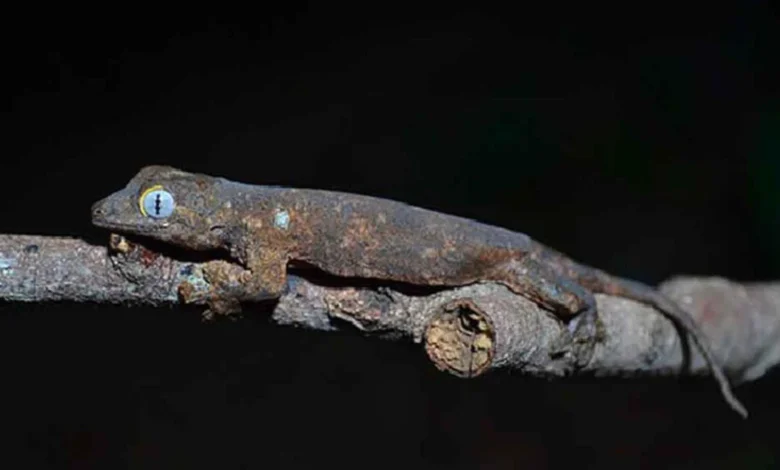
Meet Luperosaurus alvarezi — a newly described species of fringed forest gecko found nowhere else on Earth, in the protected forests of Romblon Province. Researchers published the discovery in March 2026. The peer-reviewed journal PeerJ by researchers Camila G. Meneses and Rafe M. Brown.
What does this gecko look like?
It is small — between 6.6 and 7.8 centimeters from snout to vent — with rough, uneven brownish skin and a lighter underside. But what makes it immediately striking is the yellow rings around its eyes and irises. Additionally, it ranges from light gray to blue. This is a classic fringed gecko silhouette. On top of that, it has an unmistakably unique face.
Researchers based the description on two specimens — one male, one female — both from the forests around Mt. Guiting-Guiting National Park.
Why is it named after a Filipino?
This gecko’s name has meaning. Luperosaurus alvarezi honors the late James Alvarez, a Filipino taxonomist and ecologist who dedicated years of fieldwork to studying the biodiversity of Sibuyan Island — specifically its bat species. This is a fitting tribute. The island he spent his career documenting just turned out to be home to a gecko nobody had officially named yet.
What makes Sibuyan, Romblon special?
Scientists already consider Sibuyan Island one of the Philippines’ richest biodiversity hotspots. Its isolation in the middle of the Sibuyan Sea means species that evolved there had nowhere else to go. Additionally, they can be found nowhere else. This gecko is a textbook example. It shares traits with other Luperosaurus species from Luzon, Panay, Negros, and the Babuyan and Batanes islands. However, it is distinct enough in its features to stand on its own.
That geographic isolation is also why researchers say more undiscovered species are likely still out there. If one gecko species specific to Sibuyan was hiding in plain sight, others probably are too.
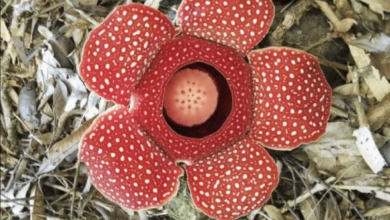
READ: Rare Corpse Flower Found in Apayao: Meet the Mysterious Plant That Smells Like A Dead Body
Why does this matter beyond the science?
Every new species scientists describe from Philippine soil is an argument for protecting the forests that shelter it. Luperosaurus alvarezi exists only inside and around Mt. Guiting-Guiting National Park. If those forests go, so does this gecko — and whatever else is still waiting to be found there.
Sibuyan has been called the Galapagos of Asia. Discoveries like this are exactly why.