
Why Has Philippine Boxing Gone 16 Years Without an Asian Games Gold?
Boxing has long been one of the Philippines’ strongest sports on the international stage. So why has it been 16 years since a Filipino boxer stood at the top of the Asian Games podium?
The last one to do it was Rey Saludar, who won the men’s 52kg division at the 2010 Asian Games in Guangzhou. Since then, Filipino boxers have still managed three silver and five bronze medals, making the drought less a story of disappearing from the podium and more a story of repeatedly falling short of gold.
The Philippines Still Has the Boxers
The strange thing about the drought is that Philippine boxing has not exactly gone quiet. The country has continued producing fighters capable of competing at the highest level, including Olympic medalists Carlo Paalam, Nesthy Petecio and Aira Villegas, all of whom are part of the six-boxer team in Nagoya.
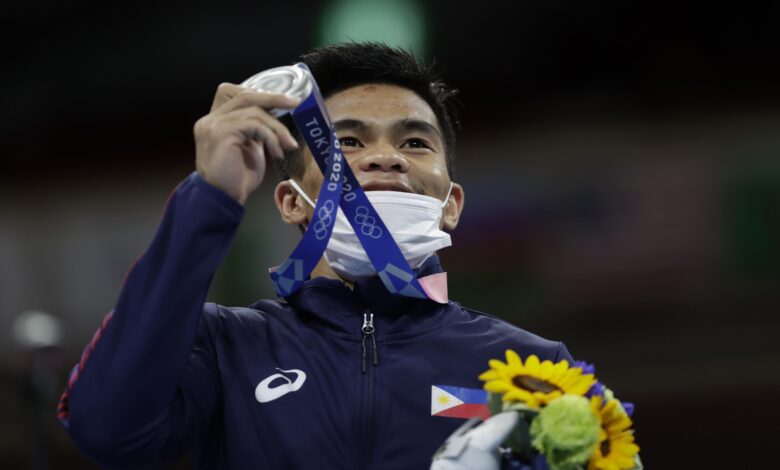
Paalam won Olympic silver at Tokyo 2020, while Petecio won silver at Tokyo and bronze at Paris 2024. Villegas added another bronze in Paris, giving the current Asian Games team a considerable amount of Olympic experience even before the first bell in Japan.
Then Again, Asia Is Where the Competition Is
This is where the drought starts to make more sense. ABAP president Marcus Manalo said winning an Asian Games boxing gold can be as difficult as winning an Olympic title because so many of the world’s best boxers come from Asia.
His comparison is backed by the recent results. At the Paris Olympics, Manalo noted that around 70 percent of the boxing gold medalists came from Asia, while at the 2023 Hangzhou Asian Games, Uzbekistan won five of the 13 boxing golds, China won three and Chinese Taipei won one.
The Philippines Keeps Getting Close
The medal record since 2010 makes the drought even more interesting. Charly Suarez won silver in 2014, Rogen Ladon followed with another silver in 2018, and Eumir Marcial added a third silver in 2023.
That means the Philippines has repeatedly been within reach of the top spot without actually taking it. Marcial, for example, reached the Hangzhou final before losing to China’s Tanglatihan Tuohetaerbieke by unanimous decision, while Suarez lost a split decision to Mongolia’s Otgondalai Dorjnyambuu in the 2014 final.
The Gold Medal Is the Missing Piece
That is what makes the 16-year drought unusual. Philippine boxers have not stopped reaching Asian Games podiums, and their Olympic performances show that the country’s best fighters can compete against elite opposition.
The missing piece is the final step. As Manalo put it, the Philippines has had “zero gold” for 16 years, and simply getting back to the top of the podium once would already be significant.
Nagoya Has a Different Lineup
The team entering the 2026 Asian Games is no longer the seven-man squad announced earlier this month. Eumir Marcial withdrew after winning his professional bout in the United States on September 20, with ABAP saying the short turnaround, long-haul travel and limited recovery time made it better for him to skip the Games.
READ: Filipino Olympic Medalists: The Complete Timeline
That leaves six Filipino boxers in Nagoya: Paalam, Petecio, Villegas, Riza Pasuit, Junmilardo Ogayre and Norlan Petecio. The group is smaller than originally planned, but it still includes three Olympic medalists carrying the country’s long-awaited gold-medal bid.
Sixteen Years Comes Down to a Few Fights
The Philippines does not need to prove that it can produce elite boxers. The Olympic medals and repeated Asian Games podium finishes have already established that.
What Philippine boxing has not been able to do since 2010 is turn that international pedigree into an Asian Games championship. In Nagoya, the question is no longer whether Filipino boxers belong among Asia’s best. It is whether one of them can finally finish at the very top.