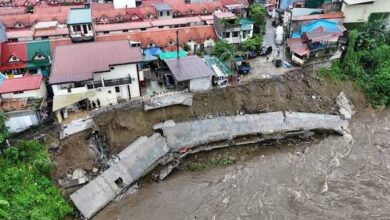
WE KEEP BUILDING ROADS. WHERE IS THE FLOOD CONTROL?
NLEX flooding has once again turned a major expressway into a traffic nightmare. Puro tayo pagawa ng daan: bagong highway, expressway, tulay at interchange.
Pero kapag malakas ang ulan, baha pa rin ang problema.
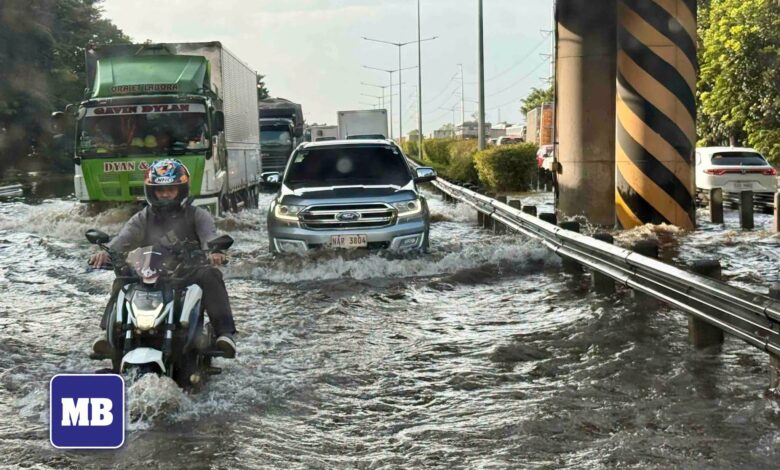
Over the weekend, portions of NLEX in San Simon, Pampanga flooded after days of Habagat rains. Motorists were stranded for hours, with some reporting trips of up to six hours. By August 31, the Tulaoc area and San Simon Interchange were still congested, while Libtong Exit remained closed because of flooding.
And this isn’t new.
Tulaoc has long been flood-prone. After a similar crisis in 2023, NLEX pursued road- and bridge-raising measures, including further pavement elevation that depends on raising Tulaoc Bridge.
Maybe the bigger question is: “Laging may daang ginagawa, pero bakit sa flood control, walang resulta?”
NLEX Flooding Is Bigger Than One Expressway
Let’s be clear: this isn’t simply about blaming NLEX.
The latest flooding is part of a much larger water-management problem in Central Luzon.
According to Pampanga officials, water was backing up because downstream areas were already saturated and could not move enough water toward Manila Bay. Public Works Secretary Vince Dizon also pointed to the sheer volume of water brought by the Habagat, saying pumps alone would not solve the problem because the water would simply return. He said the region needs infrastructure capable of handling enormous volumes of water moving through the Pampanga River system and toward Manila Bay.
An expressway doesn’t exist in a vacuum. It sits beside rivers, crosses waterways, depends on drainage, and passes through communities.
And all of those are connected to a much bigger watershed.
You cannot solve a water problem by looking only at the road.
This is also why the conversation around flooding cannot stop at concrete barriers, pumps, or raising pavement. Those can protect specific pieces of infrastructure. But they cannot, by themselves, solve what happens when an entire water system is overwhelmed.
We Build Roads. The Water Has Nowhere to Go.
To be fair, the Philippines needs infrastructure. We need roads, bridges, and reliable transportation networks that connect provinces, move goods, and make daily life easier.
But infrastructure isn’t only what we can photograph.
It is also the drainage beneath the road, the river beside it, the watershed upstream, the pumping station, the retention area, the wetland, and the waterways downstream. These may not look as impressive as a brand-new expressway, but they determine whether that expressway can keep functioning when the rain comes.
We have already explored this wider problem through pieces on wetlands, sponge cities, and urban planning.
The lesson is simple: infrastructure has to work as a system.
A road that moves people quickly is useful, but a road that moves people quickly until the water rises is still vulnerable infrastructure.
So, Where Is the Flood-Control Money?
This is where the conversation becomes uncomfortable.
PAGAWA TAYO NANG PAGAWA NG DAAN. NASAAN ANG PERA PARA SA FLOOD CONTROL?
The government has funded flood-control projects for years. The question is what happens after the money is allocated.
Where does it go?
What gets built?
Does it work?
Who checks and maintains it?
And most importantly:
What happens when it fails?
These are reasonable questions: ones taxpayers should be able to ask.
READ: Flood Control Projects: Timeline of Anomalies
“Project Completed” Shouldn’t Be the Finish Line
Maybe we need to change how we measure infrastructure.
We count kilometers of roads, bridges, flood-control projects, and money spent. But a completed project isn’t automatically a successful one, especially when it comes to flood control.
The real test comes when the rain arrives: Did the river overflow? Did the neighborhood flood? Did the road stay passable? Did the drainage work?
And if it didn’t, who fixes it?
A project shouldn’t be called successful just because the concrete is finished and the paperwork is complete.
The real test is whether it protects people.
₱100 million spent on flood control means little if it doesn’t actually reduce flood risk.
Maybe We Should Measure Infrastructure Differently
The Philippines needs roads, bridges, and better infrastructure. But progress cannot simply mean more concrete, ribbon-cuttings, or completed projects.
The real test is whether these projects protect people when the rain comes.
The latest NLEX flooding showed how much is at stake. Workers were stranded, deliveries delayed, businesses lost money, and communities already vulnerable to flooding faced another disruption.
The Toll Regulatory Board has directed NLEX Corporation to explain the flooding at Tulaoc Bridge and submit measures to prevent a recurrence. It also asked the operator to consider reimbursing toll fees for motorists forced to make U-turns.
Good. Motorists deserve accountability.
But accountability should not stop with NLEX. It must extend to the larger system—and to the public money meant to make that system safer.
So yes, let’s keep building roads and bridges. But every time the rain comes, we should ask:
Puro tayo pagawa nang pagawa ng daan. Nasaan ang flood control?
And after all the budgets, projects, and promises: Nasaan ang resulta?