
Ninoy Died for Democracy and We Still Can’t Get Anyone to Answer.
The Philippines has a lot of unanswered questions right now.
When flood-control projects are investigated for alleged irregularities, who answers? When a school becomes the scene of a shooting, who answers for the systems meant to keep students safe? When the Vice President faces an impeachment trial, what does accountability actually look like? And when inflation continues to squeeze household budgets, who answers for the people who have to live with it?
These are very different problems. They should not be treated as the same.
But they point to one uncomfortable idea: someone has to answer when the people are failed.
On August 21, Filipinos will once again remember the former senator who was assassinated in 1983 after returning to a country under authoritarian rule. Twenty-one years later, Republic Act No. 9256 formally made August 21 a national non-working holiday to commemorate his death anniversary.
We know the story. We know the airport. We know the photographs. We know what happened after.
But perhaps the harder question is what his story asks of us now.
Because the Philippines today is not the Philippines Ninoy returned to.
We have elections. We have a free press. We have courts, Congress, protests, social media, and countless ways for citizens to speak. We can ask questions publicly.
The problem is that asking is only half of accountability.
We Have the Right to Ask. Who Has to Answer?
Look at the questions confronting the country today.
The government has been investigating alleged irregularities in flood-control projects, with authorities promising that those responsible should be held accountable.
Meanwhile, the country is confronting another kind of failure after an August 18 shooting at Ateneo de Zamboanga University’s junior high school campus. It was the second fatal school shooting in the Philippines in less than two months, prompting renewed questions about firearm safety, social media, and how schools can better protect students.
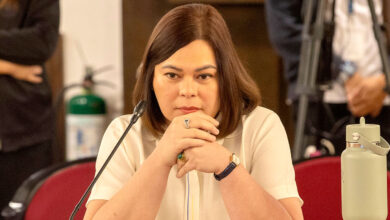
In politics, VP Sara Duterte’s impeachment trial has placed questions about the use of public power and accountability at the center of national attention. The Supreme Court dismissed petitions challenging the House proceedings after the Articles of Impeachment had already been transmitted to the Senate.
And for ordinary families, accountability can feel much more immediate.
It can mean the price of food at the market. The cost of transportation. The school expenses that keep rising.
In July, national headline inflation stood at 6.2 percent. For the bottom 30 percent of income households, inflation was even higher at 8.2 percent.
These issues do not have one villain or one easy solution.
But they all eventually arrive at the same place:
Who is responsible?
And more importantly:
What happens when responsibility is established?
Democracy Was Never Supposed to Mean Nobody Answers
This is where remembering Ninoy can become more than an annual ceremony.
Democracy is often reduced to the freedom to vote, speak, protest, and choose our leaders.
But those freedoms are only part of it.
Democracy also depends on institutions that can question power, investigate wrongdoing, expose failures, and demand answers from those entrusted with public responsibility.
And citizens have a role in that, too.
READ: Is People Power Dead? 40 Years Later, Now What?
We cannot demand accountability only when the person being questioned belongs to the political camp we dislike. We cannot celebrate transparency when it hurts our opponents and dismiss it when it exposes our allies. We cannot ask for justice only when the victim looks like us.
Accountability becomes meaningful when it applies even when it is inconvenient.
That may be one of the most important things to remember about Ninoy.
Not simply that he opposed a dictator.
Not simply that he died.
But that he represented the uncomfortable idea that power should be questioned.
43 Years Later, the Question Remains
Ninoy died in a country where challenging power carried extraordinary consequences.
Today, Filipinos have far more space to challenge it. But freedom to ask questions does not automatically produce answers.
A government can investigate. Congress can hold hearings. Courts can decide cases. Journalists can report. Citizens can protest. Commissions can publish findings.
But eventually, accountability has to mean something beyond another investigation, another hearing, another promise to get to the bottom of things.
It has to mean consequences when wrongdoing is proven. It has to mean correction when institutions fail. It has to mean transparency when the public deserves to know.
And it has to mean remembering that public office is not ownership.
It is responsibility.
So perhaps Ninoy Aquino Day should make us uncomfortable. Not because the Philippines today is the same country he left behind.
It isn’t.
But because we inherited something people before us fought to restore: the ability to ask those in power difficult questions without being told that asking itself is the problem.
Ninoy died for democracy.
Forty-three years later, we can speak. We can question. We can demand.
The harder part is making sure those questions do not disappear into the noise.
Because the Philippines has never run out of questions.
What we still need are answers.