
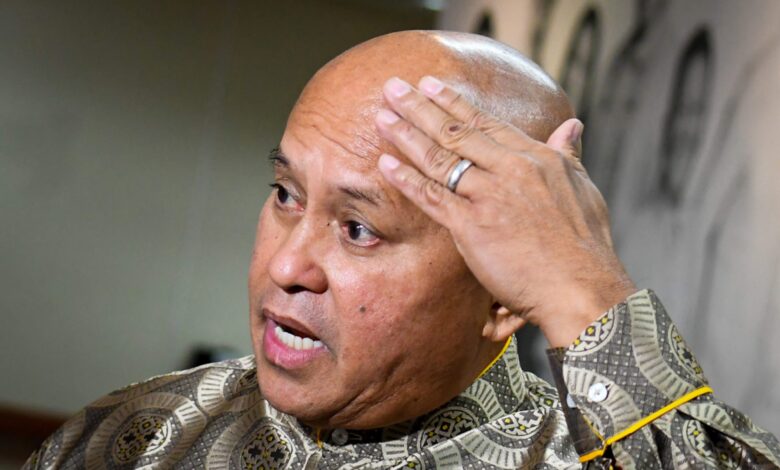
When the Lawman Runs: The Bato Dela Rosa Paradox
For years, Bato Dela Rosa was one of the most recognizable faces of law enforcement in the Philippines. As former chief of the Philippine National Police, he became the public face of a campaign that promised swift justice, strict enforcement, and zero tolerance for those who ran from the law.
Today, he finds himself on the opposite side of that equation.
The Face of Law and Order
Few public officials have tied their identity to law enforcement as closely as Bato Dela Rosa. During the Duterte administration’s war on drugs, he became known for his tough rhetoric and repeated calls for obedience to authority.
The message was simple: if the law comes for you, face the consequences.
That image is what makes the current situation so remarkable.
After months out of public view, Dela Rosa resurfaced in the Senate to participate in a leadership vote. What followed was an extraordinary series of events. Authorities reportedly attempted to serve an arrest warrant, security protocols were activated, tensions escalated, and the senator ultimately disappeared from the premises.
Since then, the Supreme Court has declined to grant him protection from arrest, while Philippine authorities continue efforts to locate him.
When the Enforcer Becomes the Fugitive
Whether one agrees with the charges against Bato Dela Rosa or not is a separate discussion.
The more immediate question is why a man whose career was built on enforcing the law appears unwilling to submit himself to the legal process he once expected others to face.
The irony is difficult to ignore.
A former police chief who built his reputation on law and order is now at the center of a nationwide manhunt. A man once associated with state authority has reportedly gone into hiding while authorities search for his whereabouts.
For many Filipinos, the symbolism may prove more powerful than the legal outcome itself.
The situation raises a broader question: should public officials be held to the same standards they expect from ordinary citizens?
The Network Behind the Escape
The controversy also extends beyond Bato Dela Rosa himself.
Authorities have expanded their scrutiny to the network of individuals who allegedly helped facilitate his escape. Among the most prominent names is Sen. Robin Padilla, who is facing an obstruction of justice complaint after authorities alleged that Dela Rosa used Padilla’s white Toyota Fortuner during his escape from the Senate. Padilla has publicly defended his actions, while arguing that issues of national sovereignty are at stake and even suggesting that Dela Rosa should be allowed to participate in Senate proceedings remotely.
Investigators are also examining the role of Nancy Dela Rosa, the senator’s wife. Reports indicate that the National Bureau of Investigation is preparing to subpoena her as part of its inquiry into the violent corridor shooting incident that allegedly preceded the escape.
The fallout has reached Senate institutions as well. Senate Sergeant-at-Arms Mao Aplasca was suspended amid questions about how a high-profile fugitive was able to evade authorities despite a reported building lockdown and heightened security measures.
Meanwhile, the consequences for Dela Rosa himself continue to mount. The Philippine National Police Firearms and Explosives Office has revoked his gun licenses and ordered the confiscation or surrender of the 117 firearms registered under his name.
That distinction matters.
The question is no longer limited to where Bato Dela Rosa is hiding. It is also about who helped him get there, who looked the other way, and whether those individuals will face consequences of their own.
The Real Test of Philippine Institutions
The bigger concern is not simply the whereabouts of one senator. It is what the episode reveals about Philippine institutions.
The Senate is supposed to be a place where laws are debated and crafted. Instead, public attention shifted toward security lockdowns, political maneuvering, and allegations that government resources and political connections may have been used to shield a wanted individual.
READ: WHY THE SENATE VOTE TO INSTALL A NEW SENATE PRESIDENT MATTERS
That should concern Filipinos regardless of political affiliation.
Institutions are measured not by how they treat ordinary citizens, but by how they treat powerful individuals. The true test of the rule of law comes when someone influential is asked to answer difficult questions.
Supporters of Dela Rosa have framed the issue as a matter of sovereignty and resistance to foreign intervention. Yet the pursuit of the senator is now being carried out by Philippine agencies and supported by Philippine institutions.
The debate is increasingly becoming less about foreign jurisdiction and more about whether domestic laws apply equally to everyone.
The Standard We Choose
The Bato Dela Rosa story is no longer just about one politician or one case. It has become a test of whether the Philippines truly believes in equal accountability under the law.
Democracies do not survive because powerful people are always innocent. Democracies survive because powerful people are expected to answer for themselves when questions arise.
The law cannot be something imposed only on the powerless. It must also be something the powerful are willing to face.
If there is one lesson from this unfolding saga, it is that credibility is easiest to demand from others and hardest to demonstrate ourselves.
The Philippines is now watching to see which standard its leaders choose to uphold.