The Politics of Ayuda: Bakit Palaging Cash?
In times of crisis, governments are expected to act quickly. As fuel prices surge and drivers, riders, small operators, and others feel the squeeze, assistance has become necessary. But necessity does not excuse bad design: enter ayuda.
In the Philippines, the way ayuda is delivered has always revealed more than the aid itself. At some point, the question stops being whether help is given, and starts becoming how it is given.
Bakit palaging cash?
It’s a simple question, but one that carries uncomfortable implications.
From System to Spectacle
During the pandemic, the government was forced to adapt. Scale and urgency demanded it. Digital transfers became viable. It wasn’t a perfect system, but significantly more traceable. Funds could be tracked, beneficiaries verified, and leakages, while not eliminated, were at least harder to conceal.
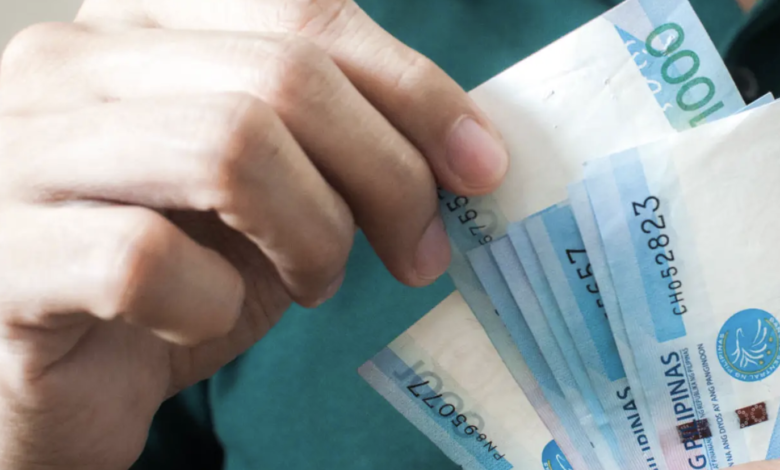
Today, as fuel subsidies are rolled out, we see a return to familiar ground: physical distribution, cash in hand, long lines, on-site validation. This is not merely a logistical shift, but a policy choice. One that moves away from traceability and back toward discretion.
Verification or Discretion?
If the concern is legitimacy, filtering out “colorum” operators or temporary drivers, then digital systems should make that easier, not harder. Platforms used by riders and drivers already maintain records. Identities are verified, activity is logged, and participation is measurable over time.
A digital pipeline does not eliminate errors, but instead reduces ambiguity. On-site distribution, by contrast, reintroduces it. Decisions about who gets prioritized or included shift from system-based verification to human judgment. These are made in real time, with limited visibility, and of course more prone to errors.
Ayuda as Political Currency
This is where the conversation changes. Because ayuda, in the Philippine context, has never been purely economic. It has always carried political weight.
Programs like TUPAD and AICS were designed as safety nets, but over time, they have also become instruments of presence. Assistance is not only delivered, but witnessed. The act of giving becomes part of the message.
No explicit violation is required. It is embedded in the structure. The closer ayuda moves to the hand that distributes it, the more it risks being perceived not as a function of the state, but as a gesture tied to individuals or networks.
The Risks We Already Know
Cash-based, physical distribution carries risks that are not new. Leakages, intermediaries, “palakasan” at the barangay level. Quiet deductions that never appear in official records. These are not abstract concerns, but are now part of lived experience.
This is why the return to less traceable systems raises legitimate questions. Why move away from digital? Why reintroduce processes that rely more on discretion than verification? And perhaps most importantly…why now?
READ: Business Leaders Push for Renewable Energy Amid Oil Crisis
Timing Is Never Neutral
Fuel subsidies do not exist in isolation. They unfold within a broader political environment, one shaped by electoral cycles, shifting alliances, and the constant need for visibility. In such a landscape, ayuda is not just relief. It is presence.
A digital transfer is efficient, but invisible. A cash payout, conducted on the ground, is seen. And in politics, visibility has value.
This does not invalidate the assistance being given. People still receive help. Needs are still addressed. But it complicates intent, or at the very least, perception.
A Familiar Pattern
Over time, patterns begin to emerge. Programs that prioritize immediacy over traceability. Distribution methods that favor visibility over efficiency. Systems that function, but in ways that leave room for interpretation.
None of these, taken alone, are definitive proof of wrongdoing. But taken together, they form a landscape that is difficult to dismiss.
At its best, ayuda should serve as insulation, protecting vulnerable sectors from shocks beyond their control. It should be predictable, transparent, and impersonal, in the way institutions are meant to be.
But when its design begins to echo older patterns—less traceable, more discretionary, more visible in ways that serve more than just the recipient—it leaves us with a question that refuses to go away:
Bakit palaging cash?
And perhaps more importantly: Who benefits from it staying that way?