
Philippine Business Crisis: 2024–2025 Darkest Years for Entrepreneurs
For many entrepreneurs, the last two years have not just been difficult. They have been destabilizing. By 2024 and 2025, running a business in the Philippines increasingly meant navigating rising costs, shrinking demand, and a system where success often depended less on performance and more on proximity to power.
Small and medium enterprises (MSMEs) felt the strain first. Supply chains tightened, operating capital became harder to rotate, and margins thinned to the point where survival became a daily calculation. What made matters worse was the sense that these pressures were not purely economic but structural.
A Market Under Stress
Key indicators reflected a slowdown across sectors. Manufacturing activity slipped into contraction territory, signaling falling output, fewer orders, and reduced hiring. While weak execution of public infrastructure projects limited their ability to stimulate growth.
Financial markets also took a hit. In a matter of weeks, billions of pesos in market value were wiped out as investor confidence faltered. Share prices fell not only on weaker outlooks, but on growing uncertainty around governance, public spending, and regulatory enforcement.
At the same time, unemployment climbed sharply within a single month, and the peso continued to weaken against the dollar. For businesses dependent on imported inputs, this translated directly into higher costs. Foreign investors, meanwhile, grew cautious and wary of inefficiencies and unresolved governance issues.
The result was a business climate marked by hesitation. Companies delayed expansion, reduced hiring, or exited altogether.
When Corruption Becomes a Business Risk
Beyond macroeconomic pressures, corruption emerged as a central factor undermining confidence. Investigations into flood control projects revealed that a small group of contractors captured a disproportionate share of government spending, raising concerns about favoritism and distorted competition.
This concentration of public contracts had ripple effects across the private sector. Companies outside favored circles found themselves locked out of opportunities, while uncertainty over ongoing probes froze activity even among firms that had benefited. In a system where rules appear selectively enforced, risk increases for everyone.
Business leaders openly acknowledged the imbalance, describing a market where fair competition no longer felt guaranteed. Investor confidence suffered accordingly, with billions in market value erased in a short period. This happened not because companies stopped earning, but because trust in the system collapsed.
Who Still Profits and Why
Not all companies struggled. Some continued to post strong earnings despite the downturn. Their resilience, however, fueled uncomfortable questions. Was performance driven by efficiency and innovation, or by access and alignment?
The perception that firms closer to political power were better shielded from risk deepened skepticism within the business community. This divide reinforced the belief that economic outcomes were no longer determined solely by merit, but by connections.
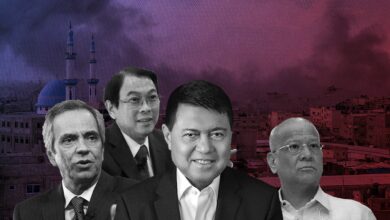
The experience of major developers such as the Villar group, led by Manny Villar, illustrates how even scale and capital offer limited protection when governance issues distort market conditions.
READ: Engineers of Corruption: Like Father, Like Son
A Crisis of Trust
At its core, the business downturn of 2024–2025 was not just about inflation, currency weakness, or weather disruptions. It was about trust in institutions, in policy consistency, and in the idea that the market rewards competence rather than proximity to power.
For MSMEs, the message was particularly harsh. They were expected to comply, adapt, and contribute to economic growth, yet received little protection from systemic failures that favored the few over the many.
Until governance reforms address corruption, contract concentration, and uneven enforcement, economic recovery will remain fragile. For now, entrepreneurs are left operating in an environment where resilience is essential, and where fairness feels increasingly optional.