
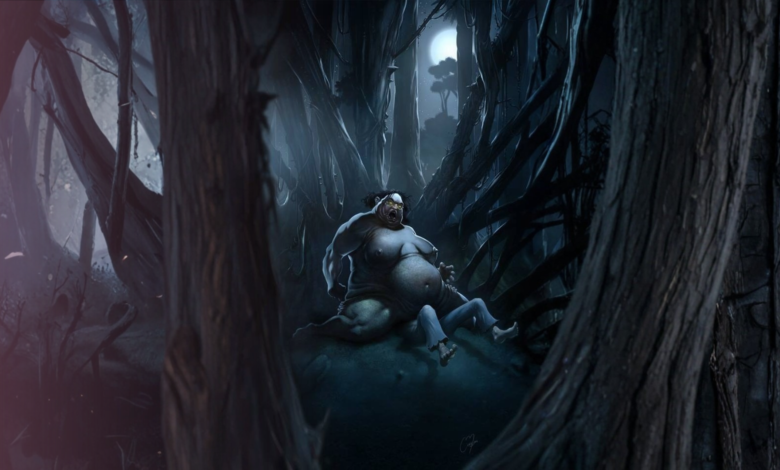
Batibat: The Creature That Hunts Sleeping Victims
There are things in the forest that should never be brought home. Batibat folklore tells of a vengeful spirit in Ilocano tradition, said to inhabit trees and attack people who sleep near wood made from them. In these chilling tales, the danger does not end when the tree is cut down. It follows the timber into the house.
Imagine cutting down an old tree and using its timber to build a house. A wooden beam becomes part of your ceiling. A post stands beside your bed. You settle into your new home, never suspecting that something may have followed the wood indoors.
According to the legend, the Batibat does not need to enter through a window or creep across the floor. It waits until night falls and someone closes their eyes. Then, when the house is silent, the spirit is said to press down on its sleeping victim’s chest, leaving them trapped beneath an invisible weight.
The most frightening part? In the story, the danger may already be inside your home.
The Spirit That Hides in the Wood
Imagine a tree standing deep in the forest, its branches reaching into the darkness. For years, it has remained rooted in the same patch of earth, surrounded by the quiet of the woods. Then someone comes along, cuts it down, and carries its timber away.
The wood becomes part of a house. A beam is fitted into the ceiling. A post stands beside a bed. The family settles in, unaware that, according to the legend, something may have come with the timber.
In Ilocano mythology, the Batibat is described in popular retellings as a spirit associated with trees and revenge. When its dwelling is disturbed, the spirit is said to retaliate against people who sleep near the wood made from its former home.
Its attack is terrifyingly simple. Rather than chasing its victim through the forest, the creature strikes when the person is asleep. Stories describe it pressing down on the victim’s chest, making it feel impossible to move or breathe comfortably.
There may be no warning. No footsteps. No sound from the hallway.
Only the terrible feeling that something is there.
The legend transforms ordinary building materials into objects of dread. A wooden post is no longer just part of the house. In the world of the Batibat, it may be a reminder of something that was taken from the forest and never truly left behind.
Batibat and Bangungot: When Sleep Becomes a Nightmare
The Batibat is often associated in popular retellings with bangungot, a Filipino term connected to frightening sleep experiences and, in traditional explanations, sudden death during sleep.
A person lies down to rest, only to experience a terrifying sensation of pressure on the chest. In folklore, the Batibat offers a supernatural explanation for the attack: a spirit has come for the sleeper.
But traditional beliefs and medical explanations must be kept separate.
Sleep paralysis is a recognized sleep phenomenon in which a person may be conscious but temporarily unable to move or speak while falling asleep or waking up. Some people experience intense fear, a sense of pressure, or the feeling that a threatening presence is nearby. These experiences may resemble elements of Batibat stories, but the similarities do not prove that the legend originated from sleep paralysis.
Bangungot has also been used in discussions of sudden unexpected death during sleep. It should not be treated as another name for sleep paralysis, and such deaths should not be attributed to a supernatural creature.
The folklore of Batibat belongs to the world of traditional belief. Its story reflects one way people have made sense of frightening experiences, but it is not a medical explanation for sleep disturbances or sudden death.
For readers interested in the folklore itself, the distinction does not make the story any less chilling. It helps explain why legends about the night, helplessness, and unseen forces can remain powerful across generations.
What Does the Batibat Spirit Look Like?
Descriptions of Philippine mythical creatures can vary between regions and storytellers, and accounts of the Batibat are not always identical.
In popular retellings, the creature is often portrayed as a formidable female spirit connected to trees and the forest. Yet its defining horror is not simply its appearance. It is what the spirit is believed to do: wait until its victim is asleep, then strike when resistance seems impossible.
That makes the Batibat especially unsettling. It does not need to chase someone through the woods or break into a locked room. In the stories, its presence may already be inside the house before anyone realizes there is anything to fear.
The timber looks ordinary. The room looks familiar. The bed is where it has always been.
Yet the story leaves behind a disturbing question: what if the thing you brought home from the forest was never truly empty?
Can You Escape a Batibat?
Some popular accounts of the folklore describe remedies for escaping the Batibat’s spirit grip, including biting one’s thumb or moving the toes. Details can differ between retellings, and these practices should be understood as folklore rather than proven ways to prevent or stop a medical episode.
The persistence of such remedies reveals something about the stories themselves. When a frightening experience happens during sleep, the person experiencing it may feel powerless. Folklore offers a creature to blame, a warning to remember, and sometimes a small action that promises a way out.
The Batibat turns an ordinary act, sleeping, into a moment of vulnerability. Its story also turns an ordinary object, a piece of wood, into a possible source of danger.
That is what gives the legend its staying power. The threat does not have to live in a distant cave or a haunted ruin. It can be part of the house you return to every night.
Why the Batibat Remains One of the Philippines’ Most Unsettling Legends
Folklore often survives because it gives a name to fears that are difficult to explain. In Ilocano tradition, the Batibat is remembered in stories about trees, revenge, and attacks on sleeping victims. Its association with bangungot has helped make it one of the more unsettling figures in popular retellings of Philippine mythology.
The story also carries a warning about the boundary between the familiar and the unknown. A tree is cut down. Its wood becomes part of a home. Life goes on as usual, until night arrives and the ordinary begins to feel unfamiliar.
ALSO READ: Insomnia Risk: Put Down Your Phone Before Going To Bed
The Batibat may be a figure of folklore, but the fear at the heart of the story is easy to understand: the terror of being vulnerable while asleep, unable to explain what is happening or make it stop.
So the next time a wooden beam creaks in the dark, there is no need to imagine a spirit waiting inside it. But in the world of the Batibat, the question alone is enough to make the room feel different.
The house is silent. The forest is far away.
And the wood beside your bed has been there all along.