The School Gate Can’t Be the End of the Safety Conversation
A school shooting in Zamboanga City has once again forced a difficult question about how safe Philippine schools really are. The August 18 incident at Ateneo de Zamboanga University’s Junior High School came less than two months after a deadly shooting at San Jose National High School in Tacloban City, where three students were killed, and 20 others were injured.
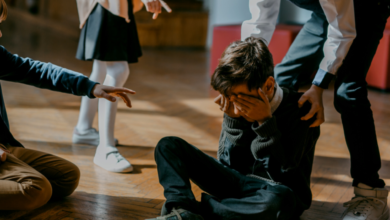
But the shootings are only part of the picture. In the weeks between them, several students across the country were involved in reported stabbing incidents, some inside school grounds and others outside the campus or after classes. The incidents happened in Cavite, Negros Occidental, Bacolod, Zamboanga, and Davao, among other areas.
Taken together, they raise a question bigger than how schools can keep weapons out.
What does it actually mean to keep students safe?
School safety doesn’t end at the gate
A school gate creates a physical boundary. Student safety doesn’t always follow one.
Some of the recent incidents happened inside classrooms. Others happened outside school grounds or while students were leaving. In one June incident in General Trias, a 14-year-old student allegedly attacked seven Grade 5 pupils inside a classroom with a kitchen knife. In Bacolod, a Grade 8 student was stabbed by another student outside their school.
That distinction matters.
A school can control who enters its campus. It has less control over what happens on the street outside, during a student’s commute, or after dismissal.
That doesn’t mean schools should be held responsible for every incident beyond their gates. It means school safety cannot be treated as a problem that begins and ends with campus security.
The people and institutions around a student matter, too: parents, teachers, guidance personnel, local governments, communities, and law enforcement.
Security can protect the gate. It can’t see everything.
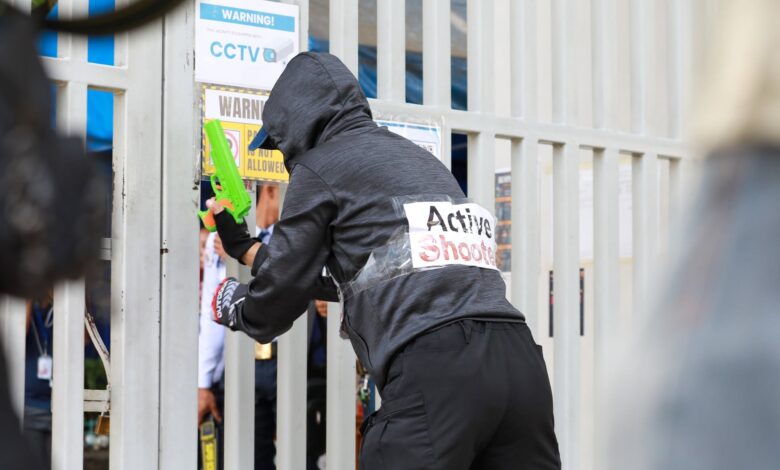
After the Tacloban shooting, schools moved quickly to strengthen physical security. Tacloban schools implemented stricter entry procedures, including bag inspections and controlled access points. Other measures included additional CCTV cameras, perimeter fencing, metal detectors, security personnel, and increased police visibility.
Those measures have a place.
So do active-shooter drills. In July, DepEd launched its first national active-shooter drill at Manila Science High School, while the PNP called for police units to coordinate with schools nationwide on similar drills.
But physical security mainly answers one question: What do we do when a threat is already here?
School safety needs to ask another: How do we recognize a problem before it becomes an emergency?
What if the warning comes first?
Violence rarely becomes visible only at the moment a weapon appears.
There can be threats, conflicts, fear, harassment or escalating disputes before an incident happens. That doesn’t mean every warning predicts violence. It means students need reliable ways to tell adults when something feels wrong.
That requires more than a security guard at the entrance.
It requires teachers who know how to escalate concerns, accessible reporting channels, guidance services, clear protocols for threats, and communication between schools and families.
The Department of the Interior and Local Government made a similar point after the Tacloban shooting, calling for stronger school safety measures, early intervention mechanisms, and community-based efforts to prevent violence before it occurs.
That preventive layer matters because a student doesn’t always arrive at a school with a weapon. Sometimes a problem arrives first as a threat, a conflict, or a cry for help.
A safe school isn’t a fortress
There is an understandable temptation to respond to frightening incidents with more visible security.
More guards. More inspections. More gates. More drills.
But a school cannot become safe simply by becoming harder to enter.
Students also need to know that there is someone they can approach when they are threatened, frightened, or struggling with a conflict. Teachers need systems that allow concerns to move beyond the classroom. Families and communities need ways to work with schools when risks extend beyond the campus.
READ: Bullying and Rising School Violence Calls for Stronger Government Action
The school gate is only one layer to prevent school shootings
Recent incidents do not prove that every Philippine school is unsafe. Nor do they prove that one security measure could have prevented them.
They do show why school safety needs to be treated as a system rather than a single checkpoint.
It includes what happens before school, inside the classroom, during dismissal, on the way home, and after an incident occurs.
A metal detector can help identify a weapon. A CCTV camera can help document an event. A drill can help people respond during an emergency.
But none of these can replace a student knowing where to report a threat, a teacher knowing what to do with that information, or a community knowing how to respond when a problem moves beyond the school grounds.
The question after another school shooting should not only be, “How do we make the gate more secure?”
It should also be:
“What else needs to happen before a student ever reaches that gate with a problem that has already become dangerous?”
The gate matters. But it cannot be the end of the safety conversation.