
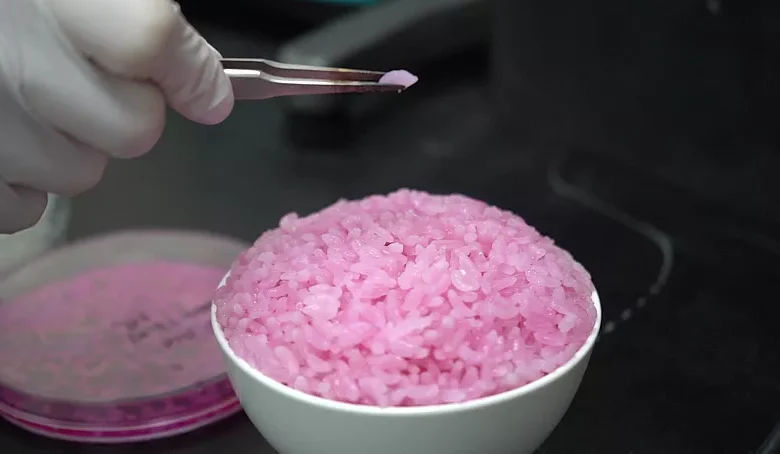
Pink Rice Could Become the Food of the Future
Scientists in South Korea have developed a unique food product that looks like ordinary rice but contains something extraordinary: beef cells grown inside the grains. Dubbed pink rice, the innovative creation combines traditional rice with lab-grown animal cells, creating a food that could offer additional protein while reducing the environmental impact of meat production.
What Exactly Is Pink Rice?
Pink rice was developed by researchers at Seoul-based institutions who explored ways to combine plant-based foods with cultivated animal cells. Instead of producing a completely lab-grown steak, the scientists used rice grains as a scaffold where beef muscle and fat cells could grow. After the cultivation process, the rice developed a light pink color and contained additional nutrients compared to ordinary rice.
The result was a hybrid food that combines characteristics of both rice and beef. Researchers described it as a potential low-cost and environmentally friendly protein source.
Why Scientists Created Pink Rice
One of the biggest challenges facing the world is producing enough food for a growing population while minimizing environmental damage. Traditional livestock farming requires significant land, water, and feed resources. It also contributes to greenhouse gas emissions.
Scientists behind pink rice wanted to develop a more sustainable alternative that could provide protein without relying entirely on conventional meat production. By using rice as a foundation, researchers were able to create a product that is easier and potentially cheaper to produce than cultivated meat alone.
How Does It Taste?
According to researchers, pink rice offers a flavor and aroma that differs from regular rice. The hybrid grains reportedly have subtle notes similar to beef and butter because of the cultivated muscle and fat cells embedded within them. While it is not meant to completely replace steak or other meat products, it provides a unique combination of familiar rice texture with added savory characteristics.
Scientists noted that the product was designed more for nutritional and environmental benefits than for perfectly replicating the taste of beef.
Potential Benefits for the Future
Researchers believe pink rice could be useful in situations where access to traditional protein sources is limited. It could potentially be used in disaster relief operations, military rations, space missions, and regions experiencing food insecurity.
Because rice is already one of the most widely consumed foods in the world, integrating cultivated cells into rice grains could make alternative proteins more accessible. The technology may also help reduce dependence on livestock farming while supporting global food sustainability goals.
ALSO READ: Lakambini Rice: PH Made High Quality Rice
Could Hybrid Foods Become Common?
The creation of pink rice highlights how rapidly food science is evolving. Around the world, researchers are exploring new ways to produce sustainable food, including cultivated meat, precision fermentation, and plant-based alternatives.
Hybrid foods like pink rice may represent a middle ground between traditional agriculture and laboratory-grown foods. Although the product is still in the research stage, many experts believe innovations like this could play a role in feeding future generations. Public acceptance, regulations, and production costs will likely determine how widely such products are adopted.
Science is reshaping the future of food
The development of pink rice demonstrates how science is reshaping the future of food. By combining rice with cultivated beef cells, South Korean researchers have created a unique hybrid food that could provide additional nutrition while reducing environmental impact.
While more research and development are needed before it reaches consumers on a large scale, pink rice offers a glimpse into what future meals might look like. As technology continues to advance, foods once considered impossible may eventually become part of everyday life.