
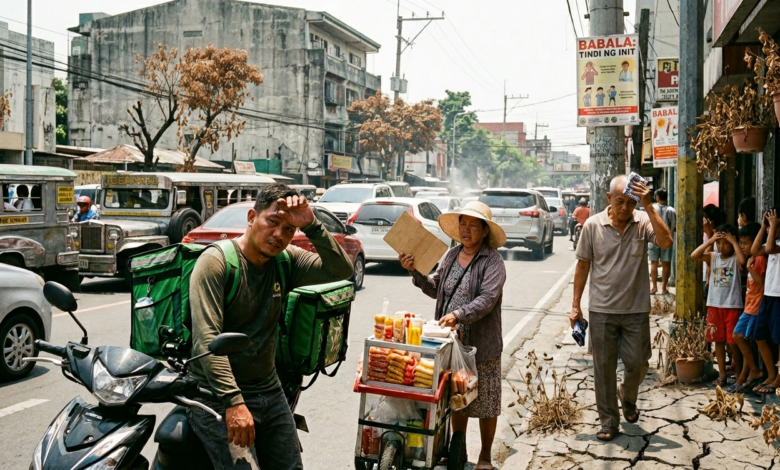
Worsening Heat Crisis Demands Urgent Response
The extreme heat that continues to affect the Philippines is no longer just a matter of discomfort. It is becoming a serious public health concern that deserves urgent national attention.
In recent weeks, temperatures and heat indices in many parts of the country have reached dangerous levels. Filipinos have felt the effects while commuting to work, attending school, working outdoors and even staying inside homes with poor ventilation. For many families, escaping the heat is simply not an option.
Heat-related Illnesses on the Rise
The Department of Health has repeatedly warned the public about heat related illnesses such as dehydration, heat exhaustion and heat stroke. Hospitals and clinics are also seeing more patients suffering from dizziness, fatigue, headaches and breathing difficulties during periods of intense heat.
The threat becomes even more dangerous for senior citizens, young children and individuals with existing medical conditions. Prolonged exposure to high temperatures places stress on the heart and lungs, increasing health risks for vulnerable sectors of society.
Workers who spend long hours under the sun face even greater danger. Construction workers, traffic enforcers, delivery riders, street vendors and farmers continue to perform physically demanding tasks despite soaring temperatures. For many of them, missing a day of work means losing income needed to support their families.
The Economic and Social Cost
The impact of extreme heat on public health also carries economic consequences. When workers become sick or exhausted, productivity declines. When students struggle to concentrate in overheated classrooms, learning suffers. When hospitals become crowded with heat related cases, pressure on the healthcare system increases.
Sen. Mark Villar earlier raised concern about the effects of extreme heat on agriculture, food supply and livelihoods. Those concerns remain valid, especially with the continued threat of El Niño and water shortages affecting farmers and fisherfolk across the country.
But the conversation must now expand beyond food security and climate adaptation. The country must also prepare for the growing health risks associated with prolonged and extreme heat.
What the Government Must Do Now
Local governments can begin by strengthening public awareness campaigns on heat related illnesses and proper hydration. Schools and workplaces should also adopt clearer safety measures during periods of dangerous heat. Flexible schedules, shaded waiting areas and access to clean drinking water can help protect both students and workers.
The government must also continue investing in healthcare facilities and emergency response systems, especially in densely populated urban areas where heat can become even more intense because of concrete structures and limited green spaces.
RELATED: Summer Heat Emotions Explained: The Heat Affects Our Emotions
Climate change is no longer a distant threat discussed only in international conferences. Filipinos are already experiencing its effects in everyday life. The challenge now is not only how to endure the heat, but how to protect lives from its growing dangers.