
Why Filipino Students Need BTS or Boosted Technology Subsidy
Millions of learners are years behind their global peers, not for lack of ability, but lack of access. A new bill may finally change that.
When Filipino students sat for the 2022 Programme for International Student Assessment, the results were quietly devastating. The Philippines ranked near the bottom among 81 countries, placing sixth from last in mathematics and reading, and third from last in science. Students were found to be roughly five to six years behind the academic competency of their global counterparts.
These numbers represent millions of young Filipinos in Palawan, the Visayas, and the urban poor communities of Metro Manila who are being left behind in a global economy that increasingly runs on digital fluency. The Philippine education crisis is inseparable from a deeper crisis: the digital divide.
A Crisis Decades in the Making
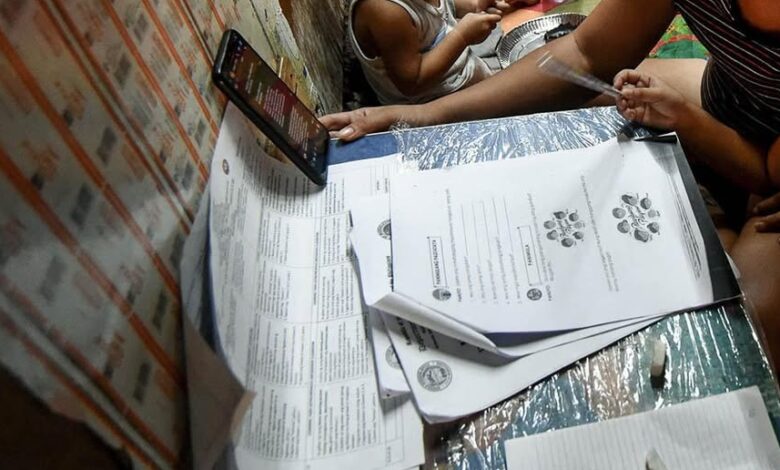
Access to digital tools is not equally distributed in the Philippines. Research consistently shows that socioeconomic disparities are the primary driver of digital exclusion. In rural communities, up to 60% of students have no personal device. Only half of public schools have reliable internet connectivity. And the cost of data relative to household income remains prohibitively high for low-income families, where financial difficulties compound already-difficult learning environments.
Even where devices and connectivity exist in some form, the quality is uneven. Students face unreliable connections, frequent power outages, and inadequate learning materials. The Department of Education has identified a backlog of 165,000 classrooms alongside the widening digital divide as the country’s most pressing educational challenges. And perhaps most alarming: when Filipino students participated in PISA in 2022, many reported that it was the first time they had ever used a computer.
This is not a peripheral problem. Poor digital literacy limits a student’s access to information, weakens their participation in distance learning, and directly diminishes their employment prospects in a global economy that demands technological competence. The Second Congressional Commission on Education (EDCOM 2) has flagged persistent gaps in digital infrastructure as a structural barrier to educational equity, one that has been accumulating for decades.
The Scale of the Gap
The Philippines ranks 56th out of 169 nations on the Internet Poverty Index. More than 18 million Filipinos cannot afford even basic internet access. The country sits far behind its Southeast Asian neighbors. Vietnam has a fixed internet penetration of 79%, Thailand at 55%, Malaysia at 54%, compared to the Philippines at just 28%.
A generation that cannot participate in digital work, finance, or communication will struggle to lift itself out of poverty, regardless of how hard it studies. The COVID-19 pandemic made this painfully visible, as millions of students in lockdown lost access to learning entirely, leading to widespread dropouts and severe academic setbacks.
How Policymakers Respond
Sen. Mark Villar has filed Senate Bill 2048, the Boosted Technology Subsidy (BTS) for Students and Learners Act. The bill targets students enrolled in public schools, State Universities and Colleges, Alternative Learning Systems, and other recognized educational programs. It directly responds to the gaps identified by EDCOM 2.
Key program benefits:
- A gadget subsidy of up to PHP 30,000
- A pocket Wi-Fi device
- A monthly internet allowance throughout the academic term
- Subsidized access to AI tools for research, learning, and academic performance
- Private sector participation incentivized through the Adopt-A-School Act of 1998
READ: Angara Pushes Classroom Construction Reform to Speed Up School Building
It also includes accountability mechanisms. Subsidized gadgets and subscriptions cannot be sold, leased, or transferred before a student completes their studies. Violations result in disqualification from the program. This safeguard is designed to ensure that resources reach students who genuinely need them and remain in educational use.
The BTS Act does not solve everything on its own. Teacher training, curriculum quality, and classroom infrastructure remain urgent and separate challenges. But for a student sitting in a barangay school who has never owned a device, who cannot afford data, and who is already years behind their global peers, a gadget and an internet connection are not luxuries. They are prerequisites.