
A Rollback Is Not a Policy: The Long Unfinished Energy Problem
For a country that imports nearly all of its fuel, the Philippines remains highly exposed to shocks amid conflicts in the Middle East. After weeks of punishing fuel price hikes, Filipinos finally got brief relief from two straight rollbacks. On April 14, diesel prices fell by as much as P2.30 per liter. Another rollback, set for April 22, is expected to cut diesel by P2.94 more. One question remains: how long will the relief last?
What the Past Taught the Country
This is not the first time geopolitical conflict has sent oil prices beyond the Philippines’ capacity to absorb. In 2011, crude prices rose amid tensions in the Middle East and remained elevated for the next three years.
The Aquino administration responded with Executive Order 32, allocating P450 million to the Pantawid Pasada program. Which provided direct fuel subsidies to jeepney and tricycle operators. At the same time, the government ordered an independent review of oil pricing to strengthen accountability among oil companies. These interventions were precise, fiscally measured, and sufficient to help the country endure the shock.
Under the Duterte administration, the response took a broader and more structural form through the TRAIN Law of 2017. The measure lowered income taxes for most wage earners while gradually increasing fuel excise taxes to offset the revenue loss. When inflation accelerated sharply in 2018, the administration demonstrated a willingness to recalibrate. Temporarily suspending the second tranche before resuming implementation after conditions improved.
The guiding idea was clear. It sought to create a more efficient tax system that could support infrastructure and social programs. In different moments of strain, both administrations managed their energy challenges.
How the Current Administration Responds to the Crisis
Marcos entered 2026 with clearer warning signs than his predecessors, yet the response has remained largely reactive. On March 25, he signed Republic Act 12316. Excise taxes on LPG and kerosene were suspended, while taxes on diesel and gasoline remained in place. Officials argued that a wider suspension would be too costly and would benefit wealthier households more than those most affected.
Transport workers instead received subsidies, while the government used the Malampaya gas fund and the Philippine National Oil Company to secure an emergency diesel supply. These are reasonable emergency strategies, but it does not provide a long-term solution.
Renewable Energy Remains Central to the Debate
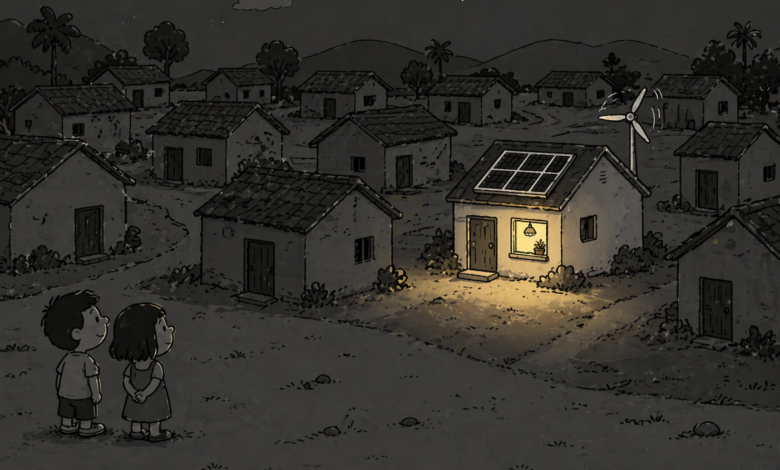
Policymakers have repeatedly proposed a longer-term solution. Advocates for renewable energy expansion argue that increasing domestic energy production would reduce dependence on imported oil and insulate the economy from geopolitical disruptions.
Sen. Mark Villar has consistently made the structural case. In 2022, he filed Senate Bill 446, seeking to mandate that all government offices use renewable energy with dedicated, appropriated funding. Every unit of power generated from domestic sources is one less unit the country needs to import at whatever price a war-disrupted global market dictates. Had that investment been made seriously a decade ago, Iran’s closure of the Strait of Hormuz would still have hurt. It would not have hurt this much.
The Philippines has the resources to act on this, as it is among the world’s top geothermal producers, and its solar and wind potential across Luzon, Visayas, and Mindanao is substantial. In November 2025 alone, the Green Energy Auction Program awarded 10.2 gigawatts across 123 projects, and experts project the renewable energy market will nearly double by 2034.
What is missing is a dedicated public fund for grid infrastructure and energy storage, the two bottlenecks that determine how much of that capacity can be reliably dispatched when it is actually needed. This is not an argument for abandoning oil and gas, but rather an argument that domestic renewable capacity is a strategic hedge against the kind of crisis the country is currently experiencing.
RELATED — Oil Price Hike in PH: Panahon na bang Gawing Fuel ang Basura?
Every price rollback that arrives without a corresponding investment in grid infrastructure, energy storage, or domestic renewable capacity is a borrowed reprieve. The next conflict or supply disruption will come. And when it does, the country will find itself in the same position, dealing with the same unfinished energy problem.