
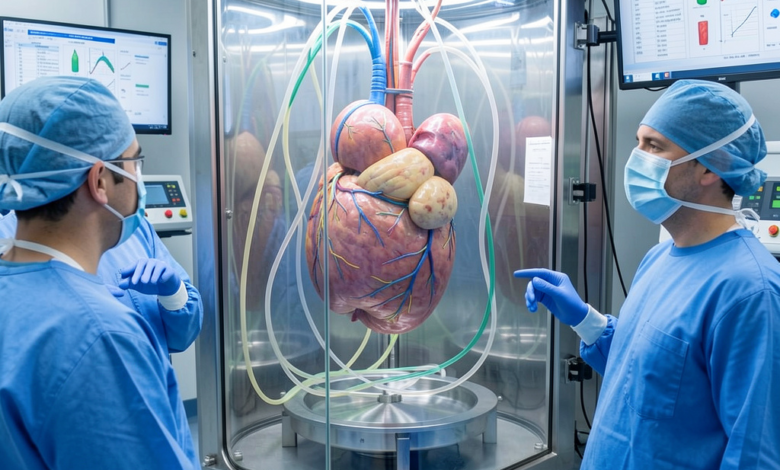
Enzyme Technology Breakthrough Could Make Universal Organ Transplants Possible
In a breakthrough that could reshape modern medicine, scientists are developing enzyme technology that may allow donated organs to work for almost any patient—regardless of blood type.
Researchers from the University of British Columbia (UBC) have successfully tested enzyme-treated organs in human models, bringing the world closer to the dream of universal donor organs. If perfected, this could dramatically reduce transplant waiting times and save thousands of lives every year.
How Enzyme Technology Works in Organ Transplants
The main challenge in organ transplantation is compatibility. The immune system attacks foreign markers—called antigens—found on donated organs when they don’t match the recipient’s blood type.
Scientists are now using enzyme technology to remove these antigens.
Researchers originally developed enzymes to create universal donor blood by stripping away sugars that determine blood type. These same sugars also coat organ blood vessels, which is why organs must normally match the recipient’s blood type.
If enzymes successfully remove these markers, the organ can potentially become “universal,” meaning it could be transplanted into more patients safely.
First Human Tests Show Promising Results
In one major milestone, scientists converted a blood type A kidney into a universal type O organ using enzyme treatment.
The modified kidney was transplanted into a human model and functioned for several days before mild immune reactions appeared. This was still considered a major success because typical mismatched organs can be rejected within minutes.
Experts say this is the first time enzyme technology has been tested in a real human transplant scenario, giving researchers valuable data to improve future treatments.
Why This Breakthrough Matters
The global organ shortage remains one of medicine’s biggest challenges.
Type O patients, for example, can only receive organs from type O donors, yet they make up a large portion of transplant waiting lists. Universal organs could help solve this imbalance.
If enzyme technology becomes clinically reliable, it could:
• Reduce transplant waiting times
• Increase survival rates
• Make donor organs usable for more patients
• Simplify matching between donors and recipients
Challenges Scientists Still Need to Solve
While results are promising, the technology is still in development.
In tests, some blood-type markers reappeared after a few days, triggering mild immune responses. Researchers are now working to make the enzyme effects last longer and combine them with existing anti-rejection treatments.
More clinical trials will be needed before universal organ transplants become widely available.
READ: Smart Bra Unlocks Only with Partner’s Fingerprint
The Future of Enzyme Technology in Medicine
Scientists believe enzyme technology could transform transplantation in the same way antibiotics transformed infection treatment.
If successful, the future may include:
• Universal donor organs
• Faster emergency transplants
• Fewer transplant rejections
• Expanded organ sharing between countries
For patients waiting for life-saving organs, this breakthrough offers new hope.
Final Thoughts
The development of enzyme technology for universal organ compatibility represents one of the most exciting medical breakthroughs in recent years. While still in early stages, it has already proven that the concept works in real human scenarios.
With continued research, universal organ transplants may move from experimental science to everyday medical practice.