The 5-Point Reform Agenda: How DepEd Plans to Transform Philippine Education by 2035
The Department of Education (DepEd) has laid out an ambitious but necessary roadmap to fix long-standing problems in Philippine basic education. Known as the 5-Point Reform Agenda, the plan aligns with the Quality Basic Education Development Plan (QBEDP) 2025–2035 and supports President Ferdinand Marcos Jr.’s vision of empowering and employing Filipinos through better education.
At its core, the reform agenda recognizes one simple truth: students can only succeed if teachers, schools, and systems work properly together. Below is a closer look at how each of the five outcomes aims to reshape Philippine education over the next decade.
What Is the 5-Point Reform Agenda and Why It Matters
The 5-Point Reform Agenda is DepEd’s long-term strategy to address deep-rooted issues in the education system, from teacher burnout and learning gaps to weak governance and low global competitiveness.
Under the leadership of Education Secretary Sonny Angara, DepEd consolidated research, performance data, and long-standing concerns from schools and educators to craft a learner-centered reform plan. Rather than focusing on short-term fixes, the agenda sets clear outcomes, measurable targets, and phased milestones that extend through 2035.
Secretary Angara emphasized that education reform must be system-wide—supporting teachers, protecting learners, fixing processes, improving curriculum quality, and ensuring graduates are job-ready. The plan also introduces three long-term phases or “base camps”:
- Catching up by 2028 to fix gaps and backlogs
- Innovating by 2031 through data-driven decision-making
- Overtaking by 2035 by positioning the Philippines as globally competitive in education and human capital
In short, the reform agenda is about making the system work better at every level, from classrooms to central offices.
1. Supporting Teachers to Deliver Quality Education
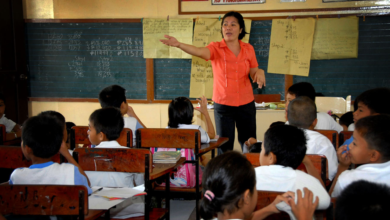
The first reform focuses on teachers—the backbone of the education system. While the revised K–12 curriculum aims to improve learning outcomes, DepEd acknowledges that teachers often struggle with limited training opportunities, a lack of resources, and overwhelming administrative work.
Under the 5-Point Reform Agenda, DepEd plans to strengthen professional development programs and establish merit-based career pathways to motivate teachers and recognize high performance. Teachers will also receive better access to textbooks, digital devices, instructional materials, and reliable internet connectivity.
To allow educators to focus on teaching, the department aims to reduce administrative workloads by filling long-vacant support positions, such as Administrative Officers. A recalibrated school budget formula will also give schools more flexibility to address local needs, from classroom repairs to learning materials.
2. Creating Safe and Supportive Learning Environments
The second outcome highlights that learning does not happen in classrooms alone—it depends on students’ physical and mental well-being.
DepEd plans to strengthen school health and nutrition programs to support learners’ overall development. At the same time, stricter enforcement of the Anti-Bullying Law and the Learner Rights and Protection Office (LRPO) aims to ensure schools remain safe and inclusive spaces.
Mental health support is also a key priority. By expanding access to counseling and academic support services, the reform agenda seeks to help students cope with stress, trauma, and learning gaps. Infrastructure improvements—both physical and digital—will further ensure that learners across the country can access quality education, regardless of location or circumstance.
3. Improving Governance and Education Systems
One major issue DepEd is addressing is the highly centralized nature of its operations. This setup often slows down decision-making and limits schools’ ability to respond to local challenges.
The third reform focuses on decentralization. By empowering regional offices, school divisions, and individual schools, DepEd aims to make programming, budgeting, and procurement more responsive and efficient. Data-informed decision-making will guide policies, ensuring that classrooms, electricity, water, and internet connectivity reach schools more quickly and efficiently.
Simply put, the goal is to make sure that education systems work smoothly so resources arrive where and when they are needed most.
READ: Where the 2026 DepEd budget Will Go: A Parent-Friendly Breakdown
4. Raising Education Quality Through Curriculum and Digitalization
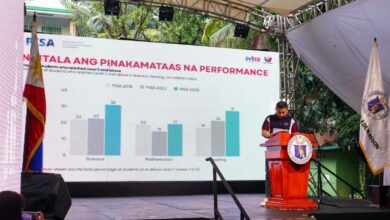
Recent results from the National Achievement Test (NAT) and the Program for International Student Assessment (PISA) show that Filipino students continue to struggle in Reading, Mathematics, and Science. Outcome 4 directly addresses this challenge.
DepEd plans to upgrade the K–12 curriculum, modernize assessments, and strengthen learning recovery programs, especially for students affected by the COVID-19 pandemic and extreme weather disruptions. Digital tools will play a bigger role in classrooms, from student assessments to skill development, helping schools keep pace with global education standards.
Clear performance targets have been set to measure progress, ensuring accountability and measurable improvement across grade levels.
5. Preparing Graduates for Work, Business, or College
The final reform focuses on what happens after graduation. The 5-Point Reform Agenda aims to ensure that basic education graduates are ready for employment, entrepreneurship, or higher education.
This means aligning school curricula with labor market needs and strengthening partnerships between schools and industry. Encouragingly, the National Certification (NC) passing rate already reached 89% in SY 2022–2023, showing progress in Senior High School reforms. Efforts are also underway to significantly improve pass rates for the Alternative Learning System (ALS), expanding opportunities for out-of-school youth and adult learners.
A Long-Term Vision for Filipino Learners
The 5-Point Reform Agenda follows a 10-year roadmap with three major milestones: catching up by 2028, innovating by 2031, and overtaking by 2035, when the Philippines aims to become globally competitive in education and human capital.
More than just a policy framework, the #Angara5 represents a shift in mindset: investing in teachers, protecting learners, fixing systems, improving quality, and preparing Filipinos for real-world success. If implemented effectively, it could mark a turning point for Philippine education, one classroom at a time.